Section 1: How the AI Job Market Has Changed More in Five Years Than Software Engineering Changed in Decades
The Rise of AI Has Redefined What It Means to Be an Engineer
Five years ago, the AI job market looked very different.
Machine learning roles were largely centered around model development, feature engineering, data preparation, experimentation, and predictive analytics. Most organizations viewed AI as a specialized capability managed by small teams of researchers, data scientists, and machine learning engineers.
Today, AI has become a foundational technology layer across industries.
Large language models, retrieval systems, AI copilots, autonomous agents, multimodal systems, vector databases, and enterprise AI platforms have transformed how organizations build products and operate businesses. As a result, entirely new technical skills have emerged as critical career differentiators.
Many of these skills were either niche, experimental, or virtually nonexistent five years ago.
For example, few engineers discussed prompt engineering, retrieval-augmented generation, AI observability, agent orchestration, vector search optimization, AI governance, or LLM infrastructure in 2021. Today, these topics appear regularly in technical interviews, enterprise roadmaps, and AI engineering job descriptions.
This shift highlights an important reality.
The most valuable AI professionals are no longer defined solely by their ability to train models. Increasingly, they are evaluated based on their ability to build complete AI systems that operate reliably in production environments.
The modern AI engineer is becoming a hybrid professional who combines machine learning, software engineering, infrastructure expertise, systems design, and product thinking.
Building AI Systems Has Become More Important Than Building Models
One of the biggest transformations in the industry is the movement from model-centric development to system-centric development.
Historically, many AI projects focused primarily on improving model performance. Teams competed to achieve higher accuracy, lower error rates, and better benchmark results.
While model quality remains important, organizations increasingly recognize that successful AI products depend on much more than the underlying model.
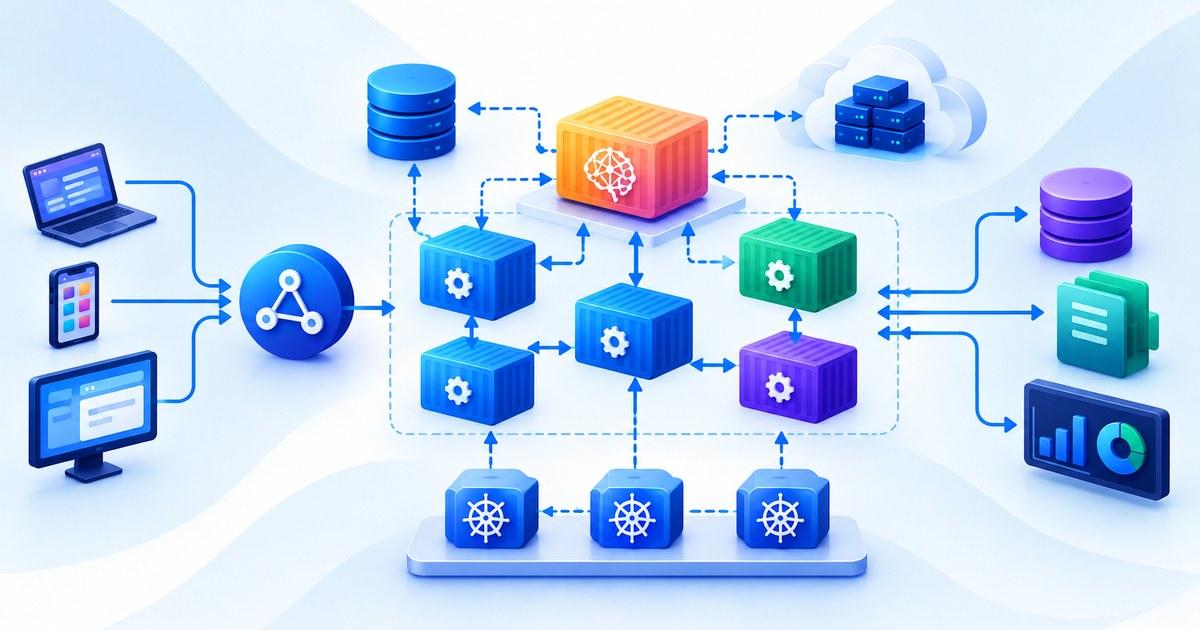
Modern AI applications often include retrieval systems, vector databases, orchestration frameworks, memory architectures, monitoring platforms, governance controls, APIs, and cloud infrastructure working together simultaneously.
This changes the skills companies value.
Engineers who understand how to connect these components into scalable systems often create more business value than those focused exclusively on model optimization.
For example, a company deploying an enterprise AI assistant needs retrieval pipelines, document indexing systems, security controls, observability frameworks, evaluation systems, and deployment infrastructure in addition to the language model itself.
This has elevated entirely new technical disciplines.
AI Infrastructure Engineering, Retrieval Engineering, AI Platform Engineering, and Agent Engineering have emerged as high-growth career paths because organizations increasingly need professionals who can operationalize AI effectively.
Another major trend is production ownership.
Companies now expect AI engineers to think beyond experimentation and understand deployment, scalability, reliability, latency, and governance challenges.
The ability to build AI systems has become as important as understanding machine learning algorithms.
Enterprise AI Adoption Is Driving New Skill Requirements
One reason new AI skills have become so valuable is the rapid growth of enterprise AI adoption.
Organizations are moving beyond proof-of-concepts and integrating AI into customer service, software development, cybersecurity operations, internal knowledge systems, workflow automation, sales enablement, and decision support platforms.
These deployments introduce challenges that traditional machine learning training rarely addressed.
Enterprise environments require reliability, compliance, explainability, monitoring, security, scalability, and cost optimization. Engineers must understand how AI systems behave in production rather than only how they perform during experimentation.
This creates demand for specialized expertise.
Skills involving retrieval systems, AI observability, model evaluation, infrastructure optimization, and governance frameworks are increasingly appearing in job descriptions because organizations need professionals capable of managing production AI systems.
The expansion of enterprise AI closely aligns with trends explored in How Enterprise AI Adoption Is Creating New Opportunities for ML Engineers, where AI infrastructure, retrieval engineering, governance, and platform development are emerging as major career growth areas.
Engineers who understand these areas often possess advantages that did not exist a few years ago.
The Fastest-Growing Skills Often Did Not Exist in Their Current Form
Perhaps the most remarkable aspect of the modern AI job market is how quickly skill requirements have evolved.
Some of today's most valuable capabilities were not commonly taught in university programs, bootcamps, or professional training environments five years ago.
This means engineers who continuously adapt are often better positioned than those relying exclusively on traditional machine learning expertise.
The AI industry increasingly rewards learning agility as much as technical knowledge itself.
Key Takeaways
The AI job market has changed dramatically over the past five years.
Organizations increasingly value engineers who can build complete AI systems rather than only train models.
Enterprise AI adoption is creating demand for entirely new technical capabilities.
AI infrastructure, retrieval systems, observability, governance, and orchestration have become major growth areas.
Many of today's most valuable AI skills were not widely recognized or required five years ago.
Section 2: Retrieval, AI Infrastructure, and Agent Engineering Have Become Elite AI Skills
Retrieval-Augmented Generation (RAG) Has Become a Core AI Engineering Skill
Five years ago, most machine learning engineers spent little time thinking about information retrieval.
AI systems were typically trained on datasets and then deployed to make predictions. Once training was complete, the model relied largely on what it had learned during that process.
The arrival of large language models changed everything.
Organizations quickly discovered that relying solely on model training was insufficient for many real-world applications. Enterprises needed AI systems capable of accessing internal documents, company knowledge bases, operational procedures, product documentation, compliance policies, customer records, and constantly changing business information.
This challenge led to the rapid adoption of Retrieval-Augmented Generation (RAG).
Today, RAG is one of the most important architectural patterns in enterprise AI. Rather than forcing models to memorize information, retrieval systems dynamically fetch relevant content and provide it to models during inference.
This significantly improves accuracy, reduces hallucinations, and allows AI systems to work with information that did not exist during model training.
As a result, retrieval engineering has become a highly valuable skill.
Modern AI engineers increasingly need to understand embeddings, vector databases, semantic search, ranking systems, indexing strategies, chunking techniques, query optimization, and retrieval evaluation frameworks.
Another major factor is scalability.
Large organizations often manage millions of documents and knowledge assets. Designing retrieval systems capable of finding the right information quickly and reliably requires significant engineering expertise.
Five years ago, retrieval engineering was a niche specialization.
Today, it is one of the most sought-after skills in enterprise AI.
AI Infrastructure Engineering Has Become One of the Highest-Impact Career Paths
One of the most dramatic changes in AI over the past five years is the growing importance of infrastructure.
Historically, machine learning teams often focused primarily on model development. Infrastructure concerns existed, but they rarely dominated engineering discussions.
Modern AI systems operate very differently.
Large language models require specialized compute environments, distributed inference architectures, GPU orchestration platforms, vector databases, observability systems, model-serving infrastructure, and workflow orchestration frameworks.
This complexity has elevated AI infrastructure engineering into a critical discipline.
Organizations increasingly recognize that even the most capable models deliver little value without reliable deployment environments. Performance, scalability, latency, uptime, security, and cost optimization all depend heavily on infrastructure quality.
Another major factor is economics.
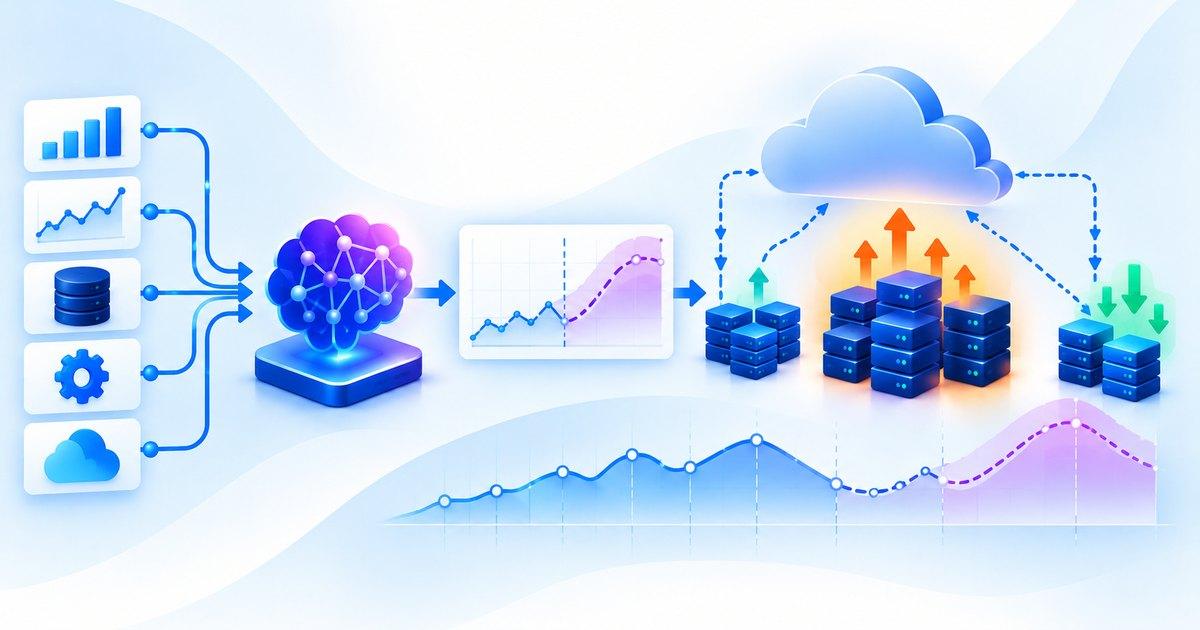
AI workloads can be extremely expensive. Engineers increasingly spend time optimizing inference costs, reducing resource consumption, improving GPU utilization, implementing caching strategies, and designing efficient deployment architectures.
These responsibilities barely existed in mainstream AI job descriptions five years ago.
Today, companies actively seek engineers capable of building production-grade AI infrastructure.
Another important trend is platform development.
Many enterprises now create centralized AI platforms that support multiple teams simultaneously. Infrastructure engineers build the deployment pipelines, monitoring frameworks, governance controls, and operational tooling that allow organizations to scale AI adoption efficiently.
The growing importance of infrastructure closely aligns with trends explored in AI Infrastructure Engineering: The Most Important Career Shift in Software Engineering, where infrastructure expertise is increasingly becoming a defining capability for modern AI professionals.
For many engineers, infrastructure knowledge has become just as valuable as machine learning knowledge.
Agent Engineering Barely Existed Five Years Ago
Perhaps no AI skill has emerged more rapidly than agent engineering.
Five years ago, most AI systems operated through simple input-output interactions. Users submitted requests, models generated responses, and the interaction ended.
Modern AI agents function differently.
Agents can plan tasks, retrieve information, use external tools, interact with APIs, coordinate workflows, maintain context, and execute multi-step processes with varying degrees of autonomy.
This creates entirely new engineering challenges.
Building effective agents requires much more than selecting a model. Engineers must design orchestration frameworks, workflow management systems, memory architectures, tool integrations, decision-making logic, evaluation frameworks, and safety controls.
Another important factor is reliability.
Agents operate across multiple steps, which increases opportunities for errors. Engineers must therefore think carefully about monitoring, validation, fallback mechanisms, and operational safeguards.
Another major trend involves enterprise automation.
Organizations increasingly deploy agents to support customer service, internal operations, software development, knowledge management, sales workflows, and research tasks. These systems require engineers capable of designing robust autonomous workflows.
Five years ago, this discipline barely existed.
Today, agent engineering is rapidly becoming one of the most exciting and valuable career paths in AI.
AI Engineers Are Becoming System Builders Rather Than Model Specialists
One of the clearest trends in the modern AI industry is the shift from model-centric expertise to system-centric expertise.
The most valuable engineers increasingly understand how retrieval systems, infrastructure platforms, orchestration frameworks, memory architectures, observability tools, and AI models work together.
This broader perspective creates significant advantages.
Organizations no longer need only people who can train models. They need professionals capable of building intelligent systems that operate reliably at scale.
The fastest-growing AI careers increasingly belong to engineers who can bridge multiple disciplines rather than specialize narrowly in a single area.
Key Takeaways
Retrieval-Augmented Generation (RAG) has become a foundational skill for modern AI engineering.
Retrieval engineers increasingly work with vector databases, semantic search, embeddings, and enterprise knowledge systems.
AI Infrastructure Engineering has emerged as one of the highest-demand specializations in the industry.
Agent Engineering is creating entirely new career opportunities centered around autonomous AI workflows.
Modern AI engineers are increasingly evaluated on their ability to build complete intelligent systems rather than optimize individual models.
Section 3: AI Observability, Evaluation, and Governance Have Become Critical Career Skills
AI Observability Is Becoming as Important as Model Development
Five years ago, most machine learning teams focused heavily on training and deployment. Once a model was placed into production, monitoring was often limited to traditional software metrics such as uptime, API response times, and infrastructure utilization.
Modern AI systems require a completely different approach.
Large language models, retrieval systems, recommendation engines, autonomous agents, and enterprise copilots exhibit behaviors that cannot be fully understood through conventional monitoring alone. A system may appear operational while producing inaccurate responses, hallucinating information, retrieving irrelevant documents, or gradually degrading in quality.
This reality has given rise to AI observability.
AI observability focuses on understanding how intelligent systems behave in production environments. Engineers monitor model outputs, retrieval quality, user interactions, latency patterns, hallucination rates, task completion metrics, and operational performance simultaneously.
This discipline barely existed as a mainstream career path five years ago.
Today, enterprises increasingly recognize that AI systems require continuous visibility and monitoring. Without observability, organizations often discover problems only after users experience failures.
Another major factor is scale.
As AI becomes embedded into customer-facing products and critical business workflows, even small performance issues can create significant operational consequences. Organizations therefore need engineers capable of identifying and diagnosing problems before they affect users.
Another important trend involves evaluation-driven monitoring.
Rather than relying solely on infrastructure metrics, observability systems increasingly assess response quality, retrieval relevance, reasoning consistency, and user satisfaction.
This creates entirely new responsibilities for AI engineers.
The ability to monitor, diagnose, and improve intelligent systems in production has become one of the most valuable skills in modern AI organizations.
AI Evaluation Has Evolved Into a Specialized Discipline
One of the biggest misconceptions about AI development is that building a model is the hardest part.
Increasingly, organizations are discovering that evaluating AI systems can be equally challenging.
Traditional machine learning systems often relied on clear performance metrics such as accuracy, precision, recall, or prediction error. Modern AI systems operate across much broader and more complex problem spaces.
Large language models generate text.
Agents complete workflows.
Retrieval systems surface contextual information.
Multimodal models process images, audio, video, and text simultaneously.
Measuring success becomes significantly more difficult.
This has created demand for AI evaluation specialists who design frameworks for assessing system quality, robustness, reasoning ability, factual consistency, retrieval performance, safety behavior, and business impact.
Another major trend involves enterprise-specific evaluation.
Organizations increasingly develop custom benchmarks that reflect their workflows rather than relying exclusively on public evaluation datasets. Engineers must determine whether AI systems perform effectively in actual business environments rather than merely achieving strong benchmark scores.
Another important development is continuous evaluation.
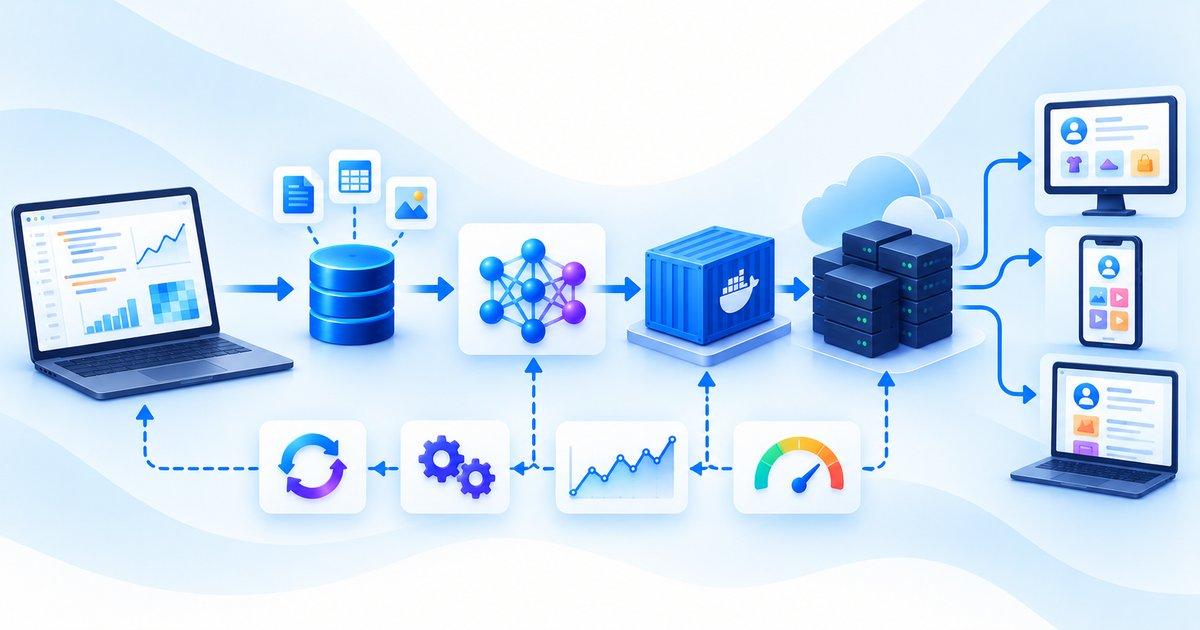
Many modern AI systems evolve rapidly through model updates, retrieval changes, infrastructure modifications, and workflow improvements. Engineers increasingly implement automated evaluation pipelines that continuously measure performance over time.
This helps organizations detect regressions, identify weaknesses, and improve systems systematically.
The growing importance of evaluation aligns closely with trends explored in The Growing Importance of Benchmark Design in AI Development, where sophisticated evaluation frameworks are becoming critical for understanding true AI capability.
As AI systems become more complex, evaluation expertise is rapidly becoming a valuable and specialized career path.
AI Governance Has Become a Major Enterprise Priority
Five years ago, AI governance was rarely discussed outside specialized regulatory or research circles.
Today, it has become a central concern for enterprises deploying AI at scale.
As organizations integrate AI into customer interactions, decision-making processes, financial operations, healthcare systems, and internal workflows, questions surrounding trust, accountability, security, compliance, and transparency have become impossible to ignore.
This has created entirely new opportunities for engineers.
AI governance specialists help organizations ensure that AI systems operate safely, responsibly, and in compliance with legal and organizational requirements. Their responsibilities often include access controls, auditability, policy enforcement, compliance monitoring, explainability systems, and risk management frameworks.
Another major factor is regulation.
Governments and regulatory bodies around the world are increasingly introducing frameworks governing AI deployment. Organizations require technical professionals capable of implementing governance mechanisms that satisfy evolving requirements.
Another important trend involves enterprise trust.
Many organizations hesitate to deploy AI broadly unless they can understand how systems behave, monitor risks, and maintain appropriate levels of control. Governance engineers help build the infrastructure necessary to support responsible adoption.
This role barely existed in most technology companies five years ago.
Today, governance expertise is becoming an increasingly important component of enterprise AI strategy.
Trust, Reliability, and Accountability Are Becoming Competitive Advantages
One of the most important shifts in the AI industry is the recognition that capability alone is not enough.
Organizations increasingly care about whether AI systems are reliable, observable, explainable, secure, and trustworthy.
This creates demand for entirely new skill sets.
Engineers who understand observability, evaluation, governance, compliance, and operational reliability are becoming highly valuable because they help transform AI from an experimental technology into dependable business infrastructure.
These skills may not have been considered essential five years ago, but they are rapidly becoming foundational components of modern AI engineering.
Key Takeaways
AI observability has emerged as a critical discipline focused on monitoring intelligent systems in production.
Modern AI evaluation requires specialized frameworks that extend beyond traditional accuracy metrics.
Enterprise organizations increasingly build custom evaluation systems tailored to real-world workflows.
AI governance has become a major priority due to compliance, security, transparency, and trust requirements.
Trust, reliability, and accountability are becoming key competitive advantages in large-scale AI deployment.
Section 4: Adaptability, AI Product Thinking, and Human-AI Collaboration Are Emerging as Career Superpowers
Adaptability Has Become More Valuable Than Mastering a Single Framework
Five years ago, many technology careers were built around deep expertise in specific tools, frameworks, or platforms.
An engineer could spend years mastering a particular machine learning library, cloud environment, or deployment stack and remain highly competitive for a long time.
The AI industry no longer works that way.
The pace of innovation has accelerated dramatically. New foundation models emerge constantly. Agent frameworks evolve rapidly. Infrastructure tools improve every few months. Retrieval architectures become more sophisticated. Entire categories of AI products appear and mature within surprisingly short timeframes.
This creates a new reality.
The most valuable AI skill is increasingly the ability to learn new skills.
Organizations now place enormous value on engineers who can adapt quickly to changing technologies rather than those whose expertise is limited to a specific toolset. Employers understand that today's leading framework may not be tomorrow's industry standard.
As a result, adaptability has become a strategic advantage.
Top AI engineers continuously experiment with emerging technologies, evaluate new approaches, and update their mental models of how intelligent systems are built. They focus on understanding underlying principles rather than becoming dependent on individual tools.
Another major factor is career resilience.
Engineers who learn efficiently can transition into new specializations as opportunities emerge. Whether the future emphasizes agent systems, multimodal architectures, reasoning models, AI infrastructure, or entirely new paradigms, adaptable professionals can evolve alongside the industry.
Another important trend involves interdisciplinary learning.
Modern AI development increasingly combines concepts from software engineering, distributed systems, data infrastructure, human-computer interaction, security, product development, and machine learning. Engineers who can move across disciplines often create the greatest value.
The ability to learn continuously is therefore becoming one of the most powerful career assets in AI.
AI Product Thinking Has Become a High-Value Technical Skill
One of the most surprising developments in the AI industry is the growing importance of product thinking.
Historically, technical professionals often focused primarily on implementation. Product strategy and user experience were typically handled by separate teams.
Modern AI systems blur these boundaries.
The success of an AI application depends heavily on how users interact with it. Even highly sophisticated models can fail if they do not fit naturally into workflows, solve meaningful problems, or provide reliable user experiences.
As a result, organizations increasingly value engineers who understand product design principles.
These engineers think beyond technical performance.
They ask questions such as:
- Does this AI feature solve a real problem?
- How will users interact with the system?
- What happens when the model makes mistakes?
- How can trust be maintained?
- What workflow improvements does this create?
This mindset helps organizations avoid building technically impressive systems that provide limited practical value.
Another major trend involves AI-native product development.
Many modern products are being designed around AI capabilities from the beginning. Engineers increasingly contribute to decisions involving user experience, workflow design, automation strategies, personalization, and human-AI interaction patterns.
Another important factor is prioritization.
Organizations often face hundreds of potential AI use cases. Engineers with strong product thinking can identify opportunities likely to generate the greatest impact.
This ability makes them especially valuable in enterprise environments where resources must be allocated carefully.
The future AI engineer increasingly resembles a hybrid of engineer, systems thinker, and product strategist.
Human-AI Collaboration Skills Are Becoming Essential
Five years ago, most discussions about AI focused on automation.
The dominant question was often whether AI would replace certain tasks or jobs.
Today, the conversation is increasingly centered on collaboration.
Many of the most successful AI systems do not replace humans entirely. Instead, they augment human capabilities by helping people work faster, make better decisions, access information more efficiently, and automate repetitive tasks.
This shift is creating a new category of valuable skills.
Engineers increasingly need to understand how humans and AI systems interact effectively.
This includes designing workflows where humans remain in control of important decisions while AI provides assistance, recommendations, analysis, or automation.
Another major trend involves AI copilots.
Whether in software development, customer support, legal analysis, healthcare, marketing, or enterprise operations, AI copilots are becoming common productivity tools. Engineers who understand how to design these interactions effectively are becoming increasingly valuable.
Another important factor is trust.
Human-AI collaboration succeeds only when users understand system behavior and feel confident using AI-generated outputs. Engineers must therefore consider explainability, transparency, error handling, and user feedback mechanisms during system design.
The growing emphasis on collaboration aligns closely with trends explored in The Future of Human-AI Collaboration in Software Engineering, where AI is increasingly viewed as a collaborative partner rather than a standalone automation tool.
Understanding how people and AI work together may become one of the most important engineering capabilities of the next decade.
The Most Valuable Future Skills Are Often Not Purely Technical
One of the clearest lessons from the evolution of AI careers is that technical expertise alone is no longer enough.
The highest-impact professionals increasingly combine technical depth with adaptability, systems thinking, product awareness, communication skills, and an understanding of human-AI interaction.
These capabilities help engineers create solutions that are not only technically impressive but also useful, trustworthy, and scalable.
As AI continues transforming industries, many of the most valuable career advantages will come from skills that barely appeared in AI job descriptions five years ago.
Key Takeaways
Adaptability is becoming more valuable than mastery of any individual AI framework or tool.
Continuous learning is now a core requirement for long-term success in AI careers.
Product thinking helps engineers build AI systems that create meaningful user and business value.
Human-AI collaboration design is emerging as a critical area of expertise.
The most valuable AI professionals increasingly combine technical excellence with systems thinking, product awareness, and communication skills.
Conclusion
The AI industry has undergone a remarkable transformation over the past five years. While machine learning once revolved primarily around model training, feature engineering, and predictive analytics, today's AI landscape is defined by complex systems that combine large language models, retrieval architectures, infrastructure platforms, agent frameworks, observability systems, governance controls, and human-centered workflows.
As a result, the most valuable AI skills have changed dramatically.
Many of the capabilities that now command significant attention from employers were either niche specializations or virtually nonexistent five years ago. Retrieval-Augmented Generation (RAG), vector databases, AI infrastructure engineering, agent orchestration, AI observability, governance engineering, and AI platform development have become essential components of modern AI ecosystems.
This shift reflects a broader change in how organizations use AI.
Companies are no longer experimenting with isolated machine learning models. They are deploying AI as business infrastructure. Intelligent systems now support customer service, software development, cybersecurity, healthcare operations, knowledge management, workflow automation, enterprise search, and strategic decision-making.
These deployments require new forms of expertise.
Engineers are increasingly expected to understand how models interact with retrieval systems, how AI applications scale in production environments, how observability frameworks detect failures, how governance mechanisms ensure compliance, and how autonomous agents operate safely within complex workflows.
One of the most important developments is the rise of AI infrastructure.
Organizations have discovered that building powerful models is only one part of the challenge. Reliable deployment, scalability, inference optimization, monitoring, and cost management often determine whether AI initiatives succeed in production. This has elevated infrastructure engineering into one of the most valuable AI specializations.
Similarly, retrieval engineering has become a cornerstone of enterprise AI.
Modern systems increasingly rely on external knowledge rather than static model memory alone. Engineers who understand embeddings, semantic search, vector databases, indexing strategies, and retrieval optimization are becoming critical contributors across industries.
The emergence of AI agents has created another major opportunity.
Agent-based systems require expertise in orchestration, memory management, tool integration, workflow execution, and safety controls. These skills barely appeared in job descriptions a few years ago but are rapidly becoming central to next-generation AI applications.
Beyond technical capabilities, organizations increasingly value adaptability.
The pace of innovation in AI means that frameworks, tools, and architectures evolve continuously. Engineers who learn quickly and adapt effectively often outperform those whose expertise remains tied to specific technologies.
Product thinking and human-AI collaboration are becoming equally important.
The most successful AI systems solve real problems, fit naturally into workflows, and enhance human capabilities rather than simply demonstrating technical sophistication. Engineers who understand users, business objectives, and interaction design increasingly create greater impact than those focused exclusively on algorithms.
Perhaps the biggest lesson is that AI careers are becoming broader rather than narrower.
Success no longer depends solely on understanding machine learning models. It increasingly depends on understanding systems, infrastructure, workflows, governance, business outcomes, and the relationship between humans and intelligent technologies.
The skills that matter most today are often those that did not exist as mainstream career paths five years ago. As AI continues evolving, this pattern will likely continue.
The professionals who thrive will be those who continuously learn, embrace change, and develop the ability to build complete intelligent systems that create real-world value.
Frequently Asked Questions
1. What AI skill has grown the fastest over the past five years?
Retrieval-Augmented Generation (RAG) and retrieval engineering are among the fastest-growing AI skill areas due to widespread enterprise adoption.
2. Why is AI infrastructure engineering becoming so valuable?
Modern AI systems require scalable deployment, inference optimization, monitoring, GPU management, and cost control, making infrastructure expertise essential.
3. What is Retrieval-Augmented Generation (RAG)?
RAG combines language models with retrieval systems that fetch relevant information from external knowledge sources during inference.
4. What are vector databases?
Vector databases store embeddings and support semantic search, enabling retrieval systems to find information based on meaning rather than exact keywords.
5. What is AI observability?
AI observability focuses on monitoring model behavior, retrieval quality, hallucinations, latency, reliability, and user interactions in production environments.
6. Why is AI evaluation becoming a specialized field?
Modern AI systems perform complex tasks that require sophisticated evaluation frameworks beyond traditional accuracy metrics.
7. What is agent engineering?
Agent engineering involves designing AI systems capable of planning, reasoning, using tools, retrieving information, and executing multi-step workflows.
8. Did agent engineering exist five years ago?
Not in its current form. The rise of foundation models and autonomous workflows has made agent engineering a major new discipline.
9. Why is AI governance important?
Organizations need governance frameworks to ensure AI systems operate safely, securely, transparently, and in compliance with regulations.
10. Are traditional machine learning skills still valuable?
Yes. Statistics, machine learning fundamentals, software engineering, and system design remain highly important foundations.
11. What role does product thinking play in AI careers?
Product thinking helps engineers build solutions that solve meaningful user and business problems rather than focusing solely on technical performance.
12. Why is adaptability considered a critical AI skill?
AI technologies evolve rapidly, making the ability to learn new tools, architectures, and workflows essential for long-term career success.
13. How can software engineers transition into modern AI roles?
By learning AI infrastructure, retrieval systems, LLM applications, deployment architectures, and production AI workflows alongside machine learning concepts.
14. What industries are hiring for these new AI skills?
Healthcare, finance, cybersecurity, retail, manufacturing, logistics, education, enterprise software, and technology companies are all actively hiring.
15. What will be the most valuable AI skill over the next five years?
The ability to design, deploy, monitor, and improve complete AI systems, combining machine learning, infrastructure, retrieval, governance, and human-centered design, will likely be one of the most valuable capabilities in the industry.