Section 1: Continuous Learning Is the Foundation of Modern AI Systems
Artificial intelligence has fundamentally changed the way software evolves after deployment. Traditional software applications typically follow a predictable lifecycle in which developers write code, test functionality, deploy the application, and periodically release updates when new features or bug fixes become available. Between these releases, the software behaves exactly as it was originally programmed. Artificial intelligence systems operate very differently. Rather than remaining static after deployment, modern AI applications are increasingly designed to learn from new information, adapt to changing environments, improve their predictions, and continuously refine their behavior throughout their operational lifetime. This ability to evolve has become one of the defining characteristics separating intelligent systems from conventional software.
The demand for continuously learning AI has emerged because the environments in which AI systems operate rarely remain constant. Customer preferences evolve, business priorities shift, cyber threats become more sophisticated, market conditions fluctuate, regulations change, and entirely new forms of data appear every day. A recommendation engine trained on customer behavior from last year may no longer reflect current purchasing habits. A fraud detection model built using historical attack patterns may struggle against newly developed fraud techniques. Even language models gradually become outdated as industries introduce new terminology, technologies, and knowledge. AI engineers therefore recognize that training a model once and deploying it indefinitely is no longer sufficient for building intelligent products that remain accurate over time.
This challenge has transformed artificial intelligence from a purely model-centric discipline into a systems engineering discipline. The success of an AI application depends not only on the quality of the initial model but also on the engineering processes that enable the system to learn continuously from production environments. Modern AI engineers design architectures where data flows continuously from users, applications, sensors, business systems, and external sources into learning pipelines that evaluate, retrain, validate, and improve models without disrupting production services. Instead of viewing deployment as the end of development, engineers now consider deployment the beginning of an ongoing learning process.
Why Static Models Eventually Become Ineffective
One of the biggest misconceptions surrounding artificial intelligence is the belief that a highly accurate model will remain highly accurate indefinitely. In reality, almost every production AI model experiences declining performance over time because the real world constantly changes. AI engineers refer to this phenomenon through concepts such as data drift and concept drift, both of which illustrate why continuous learning is essential.
Data drift occurs when the characteristics of incoming data gradually differ from the data originally used for training. Consider an online retailer whose recommendation engine learned customer preferences during holiday shopping seasons. Consumer behavior several months later may differ substantially because purchasing priorities, product availability, economic conditions, and seasonal interests have changed. Even though the recommendation model itself remains unchanged, its predictions become progressively less accurate because the underlying data distribution has evolved.
Concept drift presents an even greater challenge because the relationship between inputs and desired outputs changes over time. Fraud detection provides a clear example. Financial institutions continuously train models using historical fraud patterns to identify suspicious transactions. Criminals, however, constantly develop new techniques specifically designed to bypass existing detection systems. As fraudulent behavior evolves, patterns that previously indicated legitimate activity may become suspicious, while older fraud indicators lose predictive value. Without continuous learning, fraud detection systems gradually become less effective despite originally achieving excellent performance.
Feedback Loops Are the Engine Behind Continuous Improvement
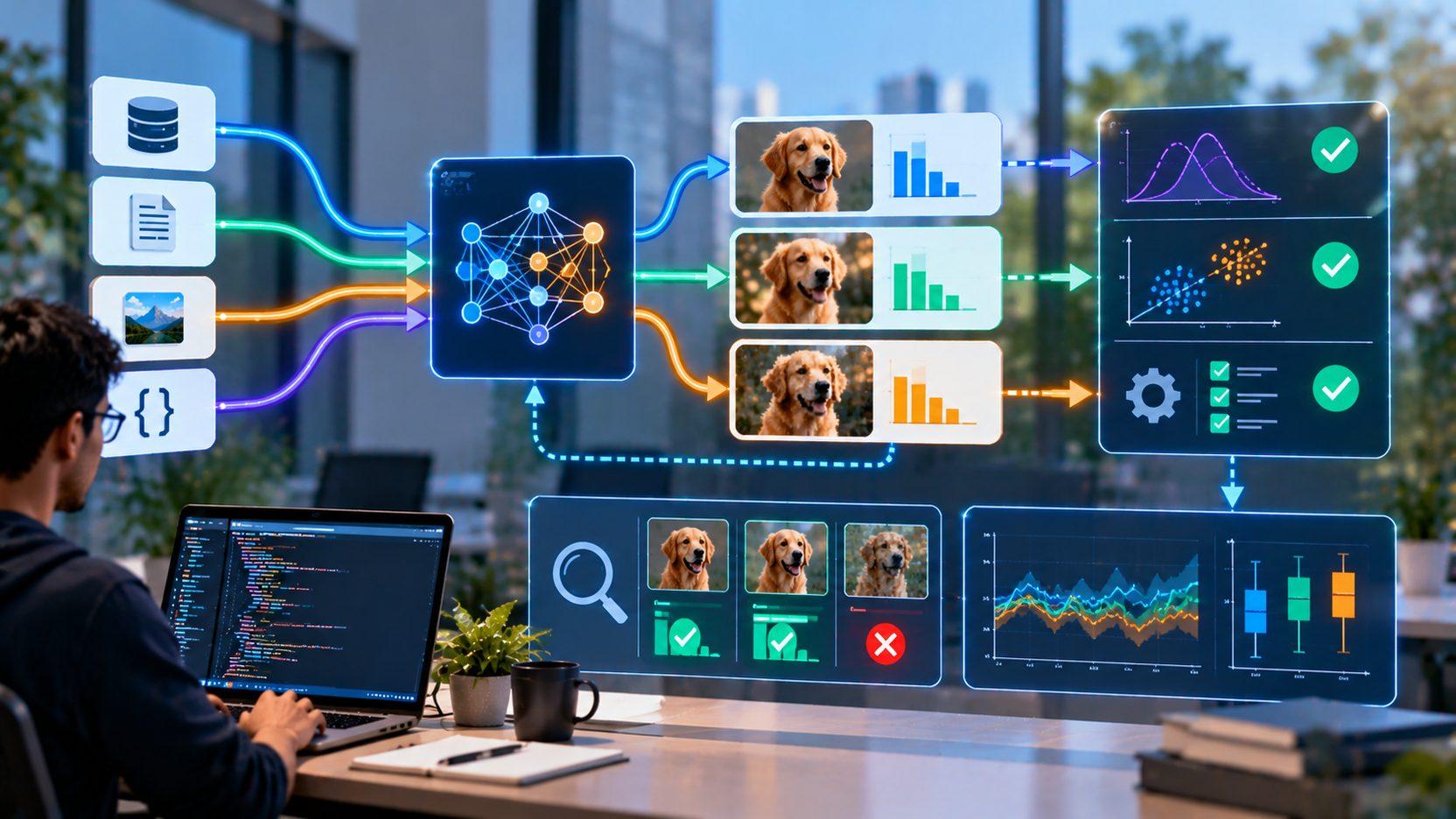
Continuous learning depends upon one critical engineering principle: feedback loops. Every intelligent system requires mechanisms that measure performance, collect new information, evaluate outcomes, and incorporate those insights into future improvements. Without feedback, even the most sophisticated AI model eventually becomes outdated because it loses awareness of how well it performs within changing production environments.
Human feedback remains one of the most valuable sources of continuous improvement. Customer ratings, corrections, annotations, preferences, support tickets, manual reviews, and expert evaluations provide high-quality information regarding model performance. Large Language Models frequently utilize Reinforcement Learning from Human Feedback (RLHF), where human evaluators compare model responses and indicate preferred outputs. Engineers use this information to fine-tune models so that future responses better align with user expectations, factual accuracy, and organizational objectives.
Automated feedback enables AI systems to improve at significantly larger scales. Recommendation engines evaluate click-through rates, viewing duration, purchases, and user engagement automatically. Search engines analyze which results users select. Advertising platforms monitor conversion rates. Enterprise AI assistants measure successful task completion. These behavioral signals provide continuous performance information without requiring explicit human annotations for every interaction.
Active Learning further improves efficiency by allowing AI systems to identify uncertain predictions and request human review only when necessary. Rather than labeling millions of examples indiscriminately, engineers prioritize the most informative data points, significantly reducing annotation costs while maximizing model improvement.
Online Learning extends continuous adaptation even further by updating model parameters incrementally as new data arrives instead of retraining models from scratch periodically. This approach enables systems operating within rapidly changing environments—such as financial markets, cybersecurity monitoring, or industrial automation—to adapt much more quickly than traditional batch training methods.
Reinforcement Learning provides another powerful mechanism for continuous improvement. Instead of learning from labeled datasets alone, reinforcement learning enables AI systems to optimize behavior through repeated interaction with an environment. Applications including robotics, autonomous vehicles, recommendation systems, resource allocation, and game-playing agents continually improve by evaluating rewards associated with different actions and adjusting future decisions accordingly.
Together, these learning mechanisms demonstrate that successful AI engineering extends far beyond developing sophisticated algorithms. Engineers must design comprehensive learning systems capable of acquiring feedback, evaluating performance, adapting safely, and improving continuously throughout production.
Readers interested in understanding how intelligent production systems coordinate automation, decision-making, and continuous optimization should also explore "The Engineering Behind Autonomous AI Workflows," which explains the engineering principles and production architectures that enable enterprise AI systems to operate reliably at scale.
Key Takeaway
Modern artificial intelligence succeeds not because models are trained once, but because they are engineered to evolve continuously. Through feedback loops, online learning, active learning, reinforcement learning, and constant monitoring for data and concept drift, AI engineers create adaptive systems capable of improving alongside changing users, businesses, and environments. As AI becomes increasingly integrated into every industry, designing systems that never stop learning will become one of the defining responsibilities of next-generation AI engineers.
Section 2: Building the Infrastructure That Enables AI to Learn Forever
Artificial intelligence is often judged by the sophistication of its models, but experienced AI engineers understand that long-term success depends far more on infrastructure than on algorithms alone. A model can achieve exceptional accuracy during development, yet still fail in production if it lacks the engineering systems needed to collect new data, monitor performance, retrain safely, validate improvements, and deploy updated versions without disrupting users. Continuous learning is therefore not simply a property of machine learning models, it is the result of carefully designed engineering infrastructure that allows AI systems to evolve reliably throughout their operational lifecycle.
This represents one of the most significant shifts in modern AI engineering. Earlier machine learning projects typically followed a relatively straightforward workflow. Data scientists gathered historical data, trained a model, evaluated its performance, and deployed it into production. Once deployed, the model often remained unchanged until engineers manually retrained it months later. While this approach worked reasonably well for stable business problems, it quickly became inadequate as AI applications expanded into environments where data changes continuously. Recommendation engines process millions of new customer interactions every day, cybersecurity systems analyze constantly evolving attack patterns, autonomous vehicles encounter new driving scenarios every hour, and enterprise AI assistants must remain current with changing organizational knowledge. Static deployment strategies cannot keep pace with these rapidly evolving environments.
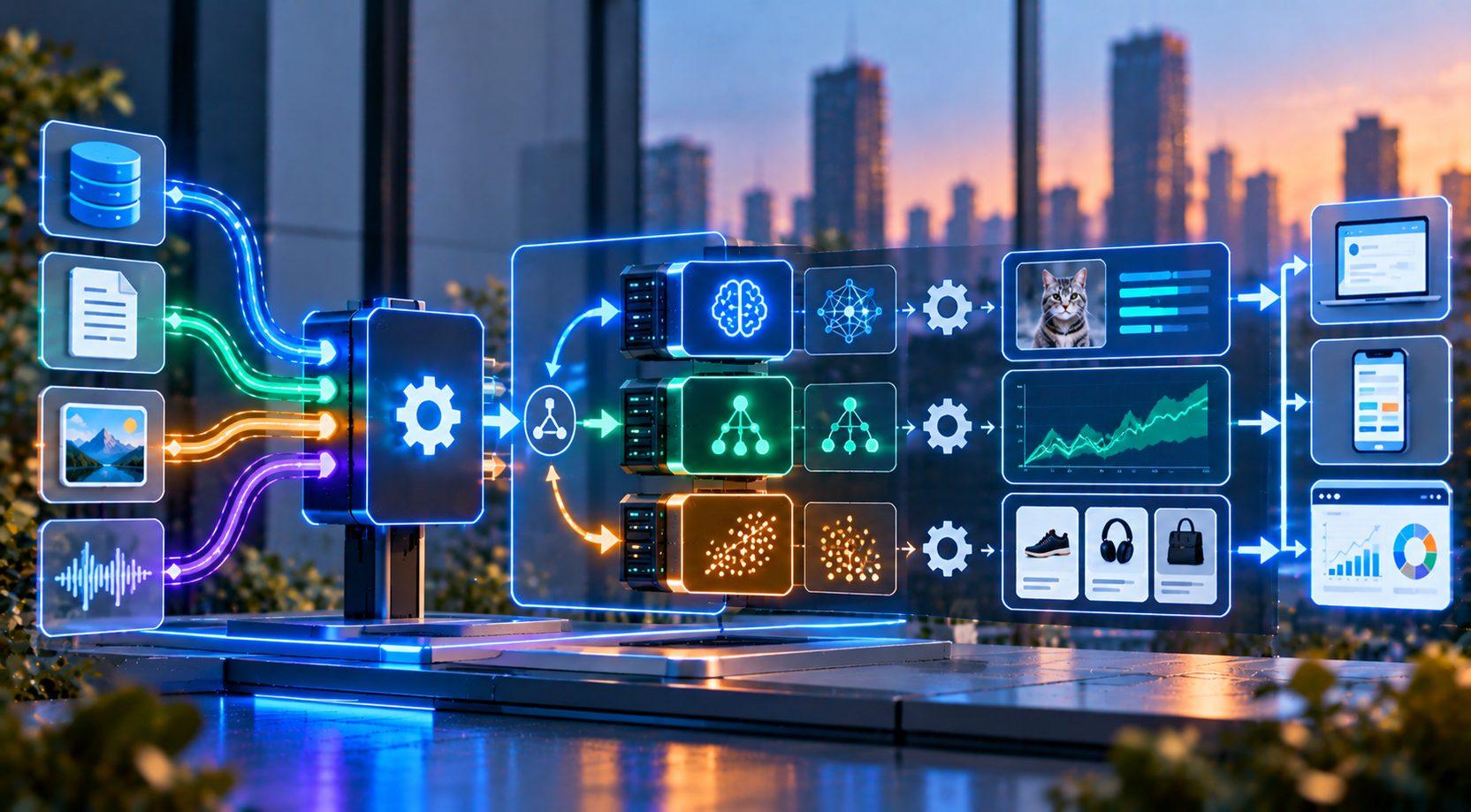
To address this challenge, AI engineers now design intelligent infrastructure capable of supporting continuous learning throughout the entire lifecycle of an AI application. Modern systems automatically collect production data, organize and version datasets, manage reusable features, evaluate model performance, trigger retraining workflows, validate updated models, deploy improvements gradually, monitor real-world behavior, and roll back changes immediately if unexpected issues arise. Rather than treating model deployment as the final stage of development, engineering teams view deployment as the beginning of an ongoing cycle of observation, learning, and improvement.
Modern MLOps Pipelines Power Continuous Learning
At the center of every continuously learning AI system is a robust Machine Learning Operations (MLOps) pipeline. MLOps extends traditional software engineering principles into machine learning by automating the processes required to develop, deploy, monitor, retrain, and maintain AI models throughout their lifecycle. Rather than relying on manual workflows that are difficult to reproduce consistently, AI engineers design automated pipelines capable of supporting continuous improvement at enterprise scale.
The process begins with continuous data collection. Every interaction between users and an AI application generates valuable information regarding model performance. Customer searches, purchases, document uploads, chatbot conversations, recommendation clicks, sensor readings, transaction histories, and operational telemetry all contribute to understanding how effectively a model performs within real-world environments. AI engineers design ingestion pipelines that continuously capture these signals while maintaining strict standards for privacy, security, and regulatory compliance.
Once data enters the system, data versioning becomes essential. Unlike conventional software, machine learning models depend directly on the quality of their training data. Engineers must therefore maintain historical records of every dataset used during development so that models can be reproduced accurately, compared fairly, and audited whenever necessary. Version-controlled datasets also allow teams to investigate unexpected performance changes by identifying precisely which data contributed to a particular model version.
Safe Deployment and Continuous Monitoring Keep Learning Systems Reliable
Continuous learning introduces an important engineering challenge: not every newly trained model performs better in production. Improvements observed during offline testing may fail under real-world conditions because production environments contain unexpected behaviors, diverse user populations, and operational complexities absent from historical datasets. AI engineers therefore design deployment strategies that allow new models to be introduced gradually while minimizing business risk.
One widely adopted approach is the shadow deployment. Instead of immediately replacing an existing production model, engineers deploy the new model alongside the current version without exposing its predictions to users. Both models process identical production requests simultaneously, allowing engineers to compare outputs, latency, accuracy, and operational behavior under real-world conditions. Because customer-facing decisions continue relying on the existing model, teams can evaluate new models safely before full deployment.
Another common strategy involves canary releases, where only a small percentage of production traffic is routed to the updated model initially. Engineers monitor key performance indicators—including prediction quality, response latency, infrastructure utilization, business outcomes, and user satisfaction—before gradually increasing deployment to larger portions of the user base. If unexpected problems emerge, traffic can immediately return to the previous model without affecting most users.
Equally important are rollback strategies. AI engineers assume that occasional deployment failures are inevitable, making rapid recovery an essential component of production infrastructure. Automated rollback mechanisms restore previously validated model versions whenever monitoring systems detect declining performance, abnormal behavior, increased latency, unexpected bias, or operational instability. This capability minimizes customer impact while allowing engineering teams to investigate issues without prolonged service disruption.
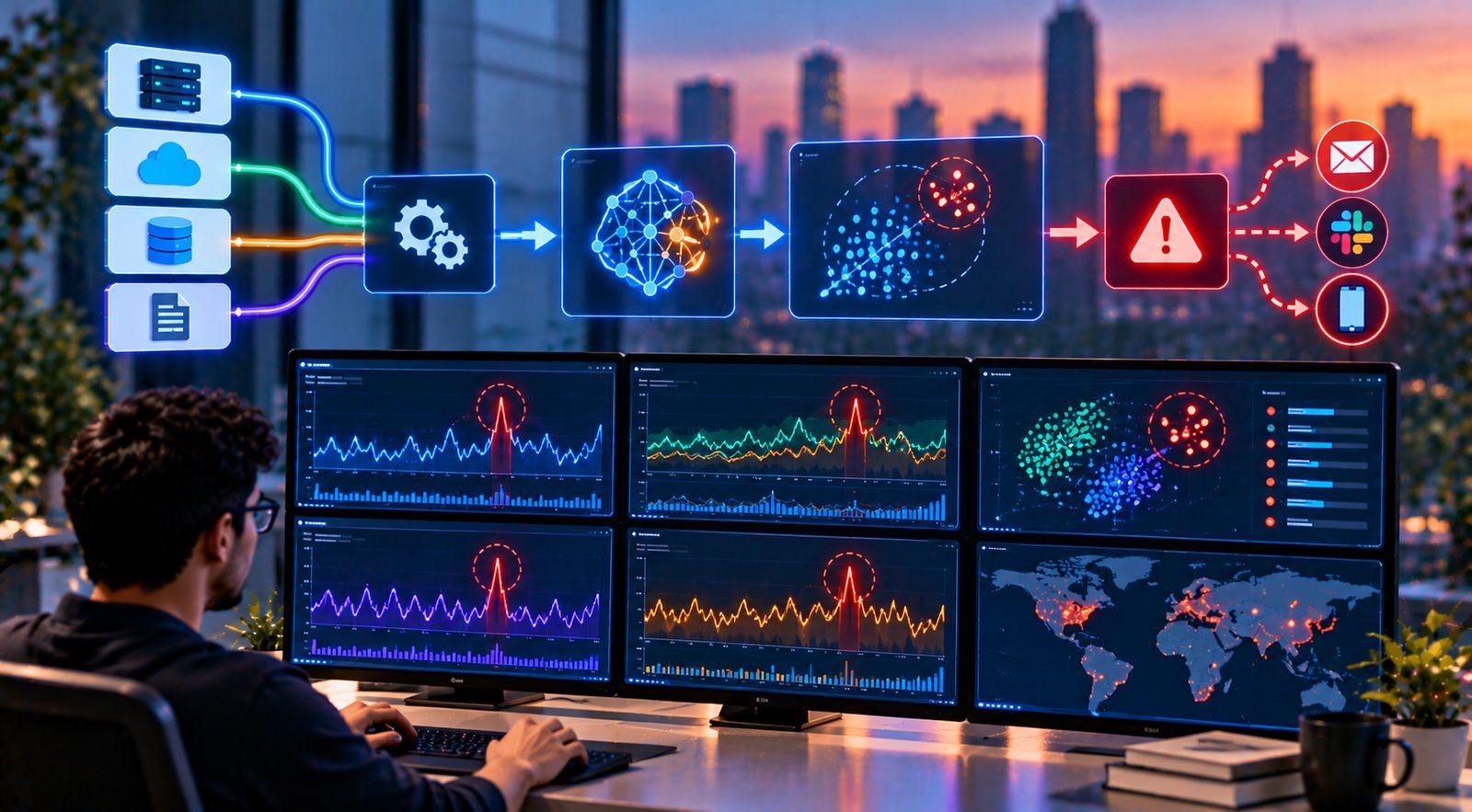
Continuous monitoring represents the final and perhaps most critical stage of the learning infrastructure. Unlike traditional software monitoring, AI systems require evaluation across multiple dimensions simultaneously. Engineers track prediction accuracy, business performance, concept drift, data drift, model confidence, inference latency, resource utilization, fairness metrics, hallucination rates for generative AI, customer engagement, and operational reliability continuously after deployment. These observations determine whether models continue performing effectively or whether additional retraining becomes necessary.
Modern observability platforms integrate logs, infrastructure metrics, application telemetry, feature distributions, model outputs, and user interactions into unified dashboards that provide engineers with comprehensive visibility into production AI behavior. Instead of reacting only after performance deteriorates significantly, engineering teams identify subtle changes early and respond proactively before customers experience noticeable degradation.
Ultimately, infrastructure, not algorithms is what enables continuous learning to operate safely at enterprise scale. Sophisticated models may generate intelligent predictions, but without automated pipelines, deployment controls, monitoring systems, and governance frameworks, they cannot evolve reliably within dynamic production environments. AI engineers therefore invest as much effort designing operational infrastructure as they do developing machine learning models because they understand that long-term intelligence depends upon engineering excellence.
Readers interested in understanding how production AI systems move from trained models to reliable customer-facing applications should also explore "What Happens Between Model Training and Customer Experience," which explains the engineering processes, deployment infrastructure, and operational workflows that transform machine learning models into scalable enterprise products.
Key Takeaway
Continuous learning is made possible by engineering infrastructure rather than algorithms alone. Through MLOps pipelines, automated data collection, feature stores, model registries, continuous retraining, shadow deployments, canary releases, rollback mechanisms, and comprehensive production monitoring, AI engineers create systems capable of learning safely and improving continuously. As enterprise AI becomes increasingly mission-critical, building resilient learning infrastructure will remain one of the defining responsibilities of modern AI engineering.
Section 3: How AI Engineers Prevent Continuous Learning From Becoming Continuous Failure
One of the greatest misconceptions about continuously learning AI systems is that allowing models to improve automatically guarantees better performance over time. In reality, continuous learning introduces an entirely new category of engineering challenges. Every update carries the possibility of degraded accuracy, unexpected bias, security vulnerabilities, operational instability, or incorrect decision-making that can affect thousands or even millions of users. Unlike traditional software, where developers can explicitly verify every rule before deployment, machine learning systems evolve based on data, making their future behavior inherently more difficult to predict. AI engineers therefore spend as much time preventing intelligent systems from learning the wrong things as they do enabling them to learn new ones.
This balancing act has become increasingly important as artificial intelligence expands into industries where errors carry significant consequences. In healthcare, an incorrectly updated diagnostic model could influence patient treatment recommendations. In financial services, a continuously retrained fraud detection system might mistakenly block legitimate transactions or overlook sophisticated fraud patterns. Enterprise AI assistants handling confidential business information must remain accurate while avoiding the disclosure of sensitive data. Autonomous systems operating in transportation or manufacturing must continuously adapt without compromising safety. These environments demand engineering processes that allow AI to evolve while maintaining reliability, transparency, and accountability.
Modern AI engineering therefore emphasizes controlled learning rather than unrestricted adaptation. Instead of permitting production models to modify themselves directly based on every interaction, organizations build structured feedback pipelines that evaluate new information, validate proposed improvements, and introduce changes only after extensive testing. Every learning cycle passes through multiple stages of verification, ensuring that improvements genuinely enhance performance before they influence customer-facing applications. Continuous learning becomes a carefully governed engineering workflow rather than an uncontrolled automation process.
AI Observability and Drift Detection Protect Production Models
Every production AI system gradually encounters changing conditions that influence model performance. Customer behavior evolves, market dynamics shift, regulations change, data quality fluctuates, and entirely new scenarios emerge that were absent during training. Without continuous observation, these changes accumulate silently until prediction quality deteriorates significantly. AI engineers therefore rely on AI observability to maintain visibility into model behavior throughout its operational lifecycle.
Unlike traditional application monitoring, AI observability extends far beyond infrastructure metrics such as CPU utilization or network latency. Engineers continuously monitor prediction accuracy, feature distributions, confidence scores, inference latency, customer engagement, business outcomes, resource utilization, hallucination frequency, fairness metrics, and model explanations simultaneously. This multidimensional visibility allows engineering teams to detect subtle performance degradation long before it becomes apparent to end users.
One of the most important observability capabilities is drift detection. Data drift occurs when incoming production data differs from the historical data used during training. For example, an e-commerce recommendation system trained primarily on desktop shopping behavior may begin receiving significantly more mobile interactions as customer preferences change. Although the model itself remains unchanged, its assumptions about user behavior gradually become less accurate.
Governance, Guardrails, and Human Oversight Build Trustworthy AI
Continuous learning becomes valuable only when users trust the systems that evolve. Trust cannot be achieved through model accuracy alone; it requires governance mechanisms that ensure AI systems behave safely, fairly, transparently, and securely as they continue learning from new information. AI engineers therefore integrate multiple layers of oversight that prevent intelligent systems from adopting harmful behaviors during continuous improvement.
One of the most widely adopted approaches involves implementing guardrails around production AI systems. Guardrails establish boundaries that limit how models respond under sensitive circumstances. Enterprise AI assistants may refuse requests involving confidential company information, financial advice, medical diagnoses, or harmful content generation. Rather than relying entirely on model behavior, engineers combine policy enforcement, rule-based validation, retrieval verification, and output filtering to ensure responses remain aligned with organizational standards.
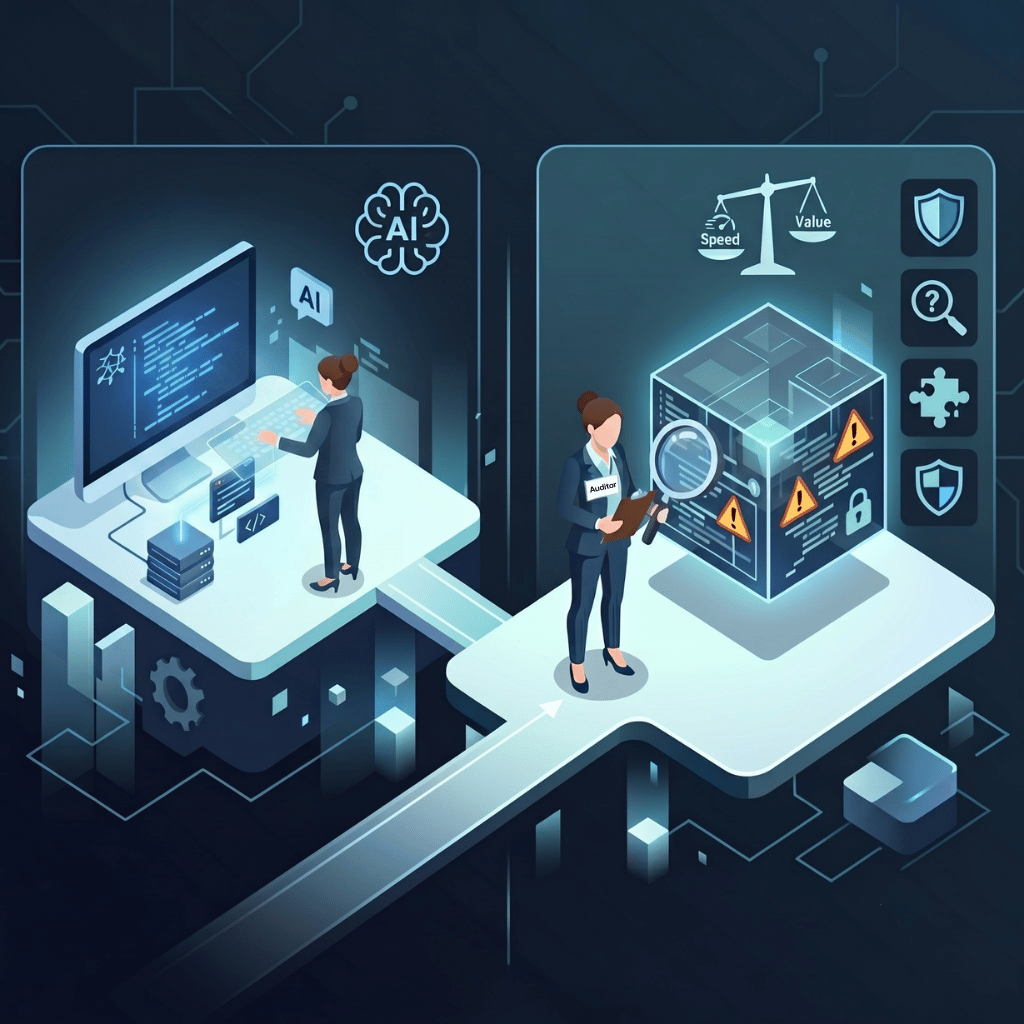
Human oversight remains equally important. Although automation accelerates continuous learning, organizations rarely allow production models to deploy significant behavioral changes without expert review. Human approval workflows require data scientists, domain specialists, security teams, or compliance officers to evaluate candidate models before they replace existing production versions. This review process is particularly critical in industries such as healthcare, finance, insurance, legal technology, and government services, where incorrect predictions may have substantial regulatory or societal consequences.
Security considerations have become increasingly sophisticated as generative AI adoption accelerates. Data poisoning attacks attempt to manipulate training datasets so that models learn incorrect or malicious behaviors. Prompt injection attacks exploit weaknesses in Large Language Models by crafting inputs that override intended instructions, potentially exposing confidential information or bypassing safety mechanisms. AI engineers mitigate these threats through dataset validation, secure data pipelines, retrieval filtering, access controls, adversarial testing, and continuous security monitoring integrated directly into AI infrastructure.
Governance frameworks extend beyond technical safeguards. Organizations increasingly establish formal Responsible AI programs defining standards for fairness, transparency, explainability, accountability, privacy, and regulatory compliance. Every model update passes through documented evaluation processes assessing not only predictive performance but also ethical considerations, demographic fairness, security risks, and legal obligations. These governance practices ensure that continuous learning supports organizational values alongside technical excellence.
Production testing provides the final layer of protection. Before newly trained models influence customer decisions, engineers evaluate them through offline benchmarking, simulation environments, shadow deployments, canary releases, adversarial testing, bias analysis, and operational stress testing. Only after passing these evaluations do models gradually receive production traffic. This disciplined engineering process minimizes deployment risk while allowing organizations to benefit from continuous improvement safely.
Industries such as healthcare, finance, and enterprise software demonstrate why these safeguards matter. Healthcare AI systems must improve diagnostic accuracy without introducing unsafe recommendations. Financial institutions continuously strengthen fraud detection while avoiding discriminatory lending decisions. Enterprise AI assistants must expand organizational knowledge without exposing confidential business information. In every case, continuous learning succeeds only because governance, monitoring, security, and human oversight evolve alongside the models themselves.
Readers interested in understanding the operational disciplines that make enterprise AI reliable beyond model development should also explore "The Hidden Layers of AI Engineering Nobody Talks About," which examines the production infrastructure, monitoring systems, governance practices, and engineering responsibilities required to operate AI successfully at scale.
Key Takeaway
Continuous learning delivers long-term value only when it is supported by rigorous engineering safeguards. Through AI observability, drift detection, hallucination monitoring, governance frameworks, guardrails, human approval workflows, adversarial security testing, and responsible deployment practices, AI engineers ensure that intelligent systems continue learning without compromising reliability, security, fairness, or user trust. As AI becomes increasingly central to enterprise operations, building trustworthy learning systems will be just as important as building intelligent ones.
Section 4: The Future Belongs to Self-Improving AI Systems
Artificial intelligence has reached a point where simply building accurate models is no longer enough to maintain a competitive advantage. Organizations now compete on how quickly their AI systems can adapt to changing information, evolving customer expectations, emerging business opportunities, and increasingly complex operating environments. The next generation of AI applications will not be defined solely by larger models or greater computational power but by their ability to improve themselves continuously while maintaining reliability, transparency, and trust. Self-improving AI systems are rapidly becoming the next frontier of artificial intelligence engineering.
This evolution represents a significant shift in how engineers think about software. Traditionally, applications followed a relatively fixed lifecycle in which developers released new versions after manually implementing improvements. Modern AI systems are gradually moving toward architectures where learning becomes an ongoing operational capability rather than an occasional development activity. Instead of treating intelligence as something embedded permanently within a trained model, AI engineers increasingly design systems where knowledge, reasoning, memory, feedback, and decision-making evolve continuously through carefully engineered learning mechanisms.
Several technological advancements are accelerating this transformation simultaneously. Large Language Models (LLMs) have demonstrated remarkable reasoning capabilities, Retrieval-Augmented Generation (RAG) enables AI systems to access constantly updated knowledge without retraining entire models, autonomous AI agents perform increasingly sophisticated multi-step tasks, and enterprise AI platforms now integrate monitoring, evaluation, orchestration, and automated deployment into unified learning ecosystems. Together, these innovations are creating AI systems capable of becoming progressively more capable throughout their operational lifetime.
Future AI Engineers Will Become Systems Engineers
As artificial intelligence continues evolving, the responsibilities of AI engineers are expanding far beyond traditional model development. Earlier generations of machine learning professionals focused primarily on feature engineering, algorithm selection, model optimization, and statistical evaluation. Modern AI engineering increasingly requires expertise spanning distributed systems, cloud computing, software architecture, cybersecurity, observability, data engineering, governance, infrastructure automation, and intelligent orchestration. In many respects, AI engineers are becoming systems engineers responsible for designing entire learning ecosystems rather than individual machine learning models.
One important trend contributing to this shift is the rise of Edge AI. Intelligent devices including autonomous vehicles, manufacturing equipment, wearable healthcare devices, drones, industrial sensors, and smart city infrastructure increasingly perform inference close to where data is generated rather than relying exclusively on centralized cloud environments. Engineers must therefore design systems capable of learning efficiently across distributed computing environments while balancing computational constraints, network latency, security requirements, and operational reliability.
Federated learning represents another significant advancement supporting this vision. Instead of collecting sensitive data within centralized cloud infrastructure, federated learning enables models to improve by training locally across multiple devices while sharing only learned parameters rather than raw data. This approach strengthens privacy, reduces regulatory concerns, and enables collaborative learning across organizations without exposing confidential information. Industries such as healthcare, financial services, telecommunications, and consumer technology increasingly explore federated learning because it combines continuous improvement with strong data protection.
The skills required for future AI engineers are therefore becoming broader than ever before. Strong foundations in machine learning remain essential, but equally important are expertise in cloud-native architecture, distributed computing, MLOps, AI observability, Kubernetes, vector databases, API development, cybersecurity, governance, software engineering, and intelligent workflow orchestration. Engineers must also develop systems thinking, recognizing that model quality depends upon the interactions between data pipelines, infrastructure, deployment platforms, monitoring systems, security controls, and feedback mechanisms.
Continuous learning itself will become a defining engineering discipline. Organizations will increasingly evaluate AI platforms according to how effectively they improve over time rather than simply measuring initial benchmark performance. Engineers capable of designing adaptive infrastructures that safely integrate new knowledge, automate evaluation, coordinate intelligent agents, and maintain operational trust will become indispensable across nearly every industry.
Ultimately, the future of artificial intelligence belongs to systems that never stop learning and to the engineers capable of building them. Designing adaptive AI ecosystems requires far more than machine learning expertise; it demands architectural vision, operational excellence, and a deep understanding of how intelligent systems evolve within complex real-world environments. As enterprises continue integrating AI into every aspect of their operations, the professionals who master these multidisciplinary skills will lead one of the most influential engineering transformations of the coming decade.
Readers interested in understanding how experimental machine learning evolves into scalable production systems should also explore "From Research to Real-World ML Engineering: Bridging the Gap," which examines the engineering practices, infrastructure decisions, and operational workflows required to transform AI research into reliable enterprise applications.
Key Takeaway
The future of artificial intelligence lies in self-improving systems that continuously adapt through autonomous agents, Retrieval-Augmented Generation, long-term memory, personalized learning, federated learning, and intelligent infrastructure. As AI evolves beyond standalone models into adaptive ecosystems, AI engineers will increasingly become systems engineers responsible for designing platforms that learn safely, scale efficiently, and deliver lasting business value. Organizations that invest in these engineering capabilities today will build the intelligent systems that define the next era of AI innovation.
Conclusion
Artificial intelligence is rapidly moving beyond the era of static machine learning models into a future where intelligent systems continuously learn, adapt, and improve throughout their operational lives. This transformation is fundamentally changing how AI products are designed, deployed, and maintained. Organizations no longer measure success solely by how accurately a model performs on a benchmark dataset before deployment. Instead, long-term value increasingly depends on whether an AI system can remain relevant as customer behavior evolves, business requirements change, new information becomes available, and operational environments grow more complex. Designing systems that never stop learning has therefore become one of the defining responsibilities of modern AI engineers.
At the heart of this transformation lies a simple reality: the world changes constantly. Customer preferences shift, industries adopt new technologies, fraud patterns evolve, regulations are updated, and organizations generate enormous amounts of new knowledge every day. A machine learning model trained once will inevitably become less effective if it cannot adapt to these changes. AI engineers solve this challenge by designing continuous learning systems that combine automated data collection, intelligent feedback loops, robust MLOps pipelines, feature management, model registries, continuous monitoring, and safe deployment strategies into a unified engineering ecosystem. Intelligence is no longer viewed as a one-time achievement but as an ongoing engineering process.
Equally important is the infrastructure supporting this evolution. Sophisticated algorithms alone cannot create continuously improving AI. Reliable learning requires production-grade engineering platforms capable of collecting high-quality data, versioning datasets, monitoring model behavior, detecting drift, validating improvements, deploying new models safely, and rolling back changes whenever necessary. Modern AI infrastructure has become just as critical as the models themselves because it enables organizations to improve intelligence consistently while maintaining operational stability. In many ways, infrastructure has become the engine that powers continuous learning.
Frequently Asked Questions (FAQs)
1. What is continuous learning in artificial intelligence?
Continuous learning is the ability of an AI system to improve over time by learning from new data, user interactions, feedback, and changing environments instead of relying only on its original training dataset.
2. How do AI systems continue learning after deployment?
AI systems continue learning through automated data collection, feedback loops, retraining pipelines, MLOps workflows, performance monitoring, and model evaluation that allow engineers to update production models safely and regularly.
3. What is concept drift in machine learning?
Concept drift occurs when the relationship between input data and the expected output changes over time, causing a previously accurate model to become less effective if it is not updated.
4. What is data drift?
Data drift refers to changes in the statistical distribution of incoming production data compared to the data used during training, which can reduce model performance over time.
5. What is online learning in AI?
Online learning is a machine learning approach in which models update incrementally as new data becomes available, allowing them to adapt more quickly to changing environments.
6. What is active learning?
Active learning enables AI models to identify uncertain or high-value data points and request human labeling only for those examples, improving learning efficiency while reducing annotation costs.
7. How does reinforcement learning support continuous improvement?
Reinforcement learning allows AI systems to improve by interacting with an environment, receiving rewards or penalties for their actions, and gradually learning strategies that maximize long-term performance.
8. Why is MLOps important for continuous learning?
MLOps automates the entire machine learning lifecycle, including data collection, model training, deployment, monitoring, retraining, and governance, enabling AI systems to improve reliably and efficiently in production.
9. What is a feature store?
A feature store is a centralized repository that stores reusable machine learning features, ensuring consistency between model training and production while simplifying collaboration across engineering teams.
10. How do AI engineers monitor production models?
AI engineers monitor prediction accuracy, inference latency, data quality, concept drift, feature distributions, user feedback, business metrics, resource utilization, and model confidence to ensure production systems continue performing effectively.
11. What is AI observability?
AI observability is the practice of monitoring AI systems across multiple dimensions, including model behavior, infrastructure, data quality, predictions, and business outcomes—to detect issues before they affect users.
12. How do companies safely retrain AI models?
Organizations use automated retraining pipelines, offline validation, shadow deployments, canary releases, rollback mechanisms, and human approval workflows before deploying updated models into production.
13. What risks exist in continuously learning AI systems?
Potential risks include model drift, hallucinations, biased predictions, data poisoning, prompt injection attacks, overfitting, security vulnerabilities, compliance violations, and unintended changes in model behavior if learning is not properly governed.
14. What skills do AI engineers need to build adaptive AI systems?
AI engineers should develop expertise in machine learning, MLOps, cloud computing, distributed systems, Kubernetes, AI observability, software engineering, data engineering, cybersecurity, Retrieval-Augmented Generation (RAG), and AI governance.
15. Which industries benefit the most from continuously learning AI systems?
Industries including healthcare, financial services, cybersecurity, retail, manufacturing, transportation, telecommunications, education, media, and enterprise software benefit significantly because they operate in environments where data, customer behavior, and business requirements evolve continuously.