Section 1: Understanding How Machine Learning Powers Digital Twins
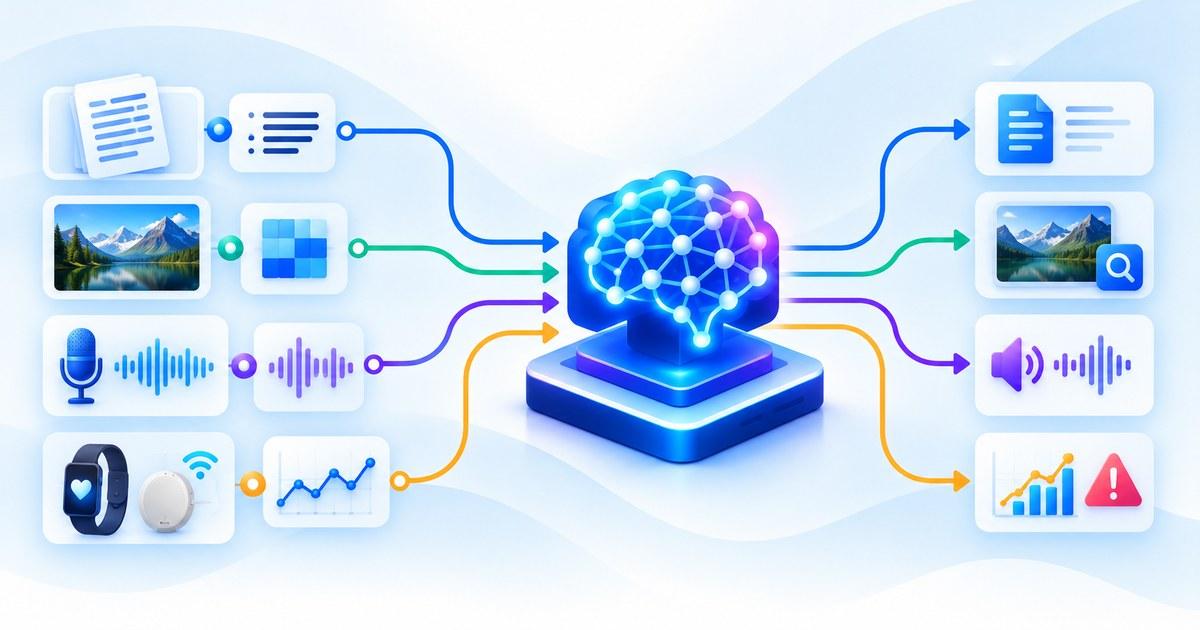
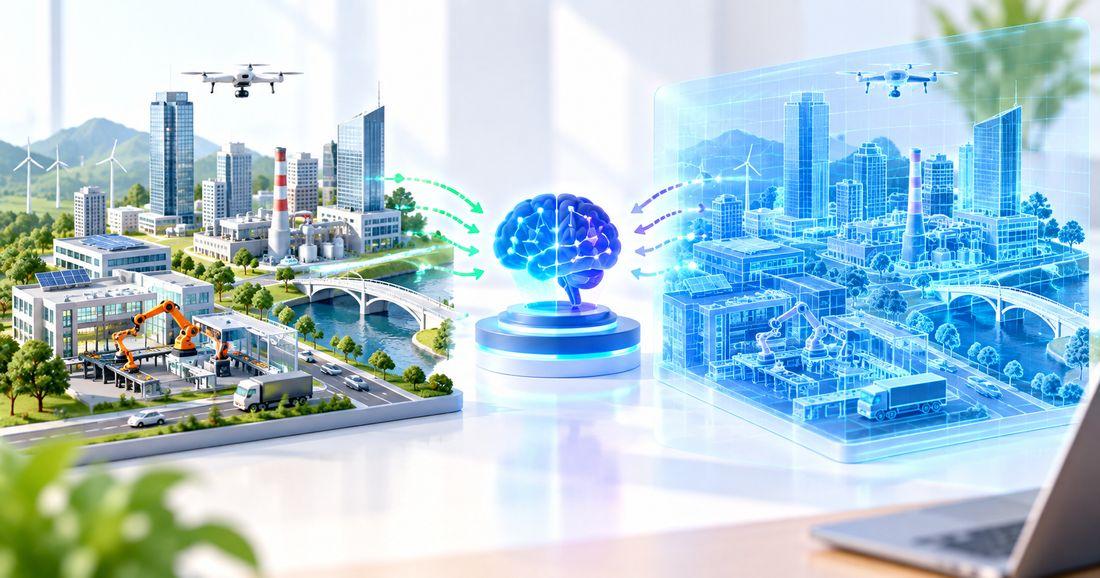
A digital twin begins with a deceptively simple idea: create a computational representation of something that exists in the physical world. That “something” could be a manufacturing machine, aircraft engine, wind turbine, building, vehicle, warehouse, production line, or even an interconnected infrastructure system. The representation becomes significantly more useful when it is continuously connected to information from the physical system and can evolve as that system changes. Machine learning adds another layer of capability by allowing the digital twin to learn patterns, estimate hidden conditions, predict future behavior, and support decisions that would be difficult to make from raw sensor data alone.
This makes the relationship between machine learning and digital twins fundamentally different from the relationship between a conventional predictive model and a dataset. A conventional ML model generally receives input data and produces an output such as a classification, forecast, probability, or recommendation. A machine learning-powered digital twin attempts to maintain an evolving representation of the state and behavior of a physical system. The model is therefore not simply predicting an isolated target; it is contributing to an ongoing computational representation of reality.
From Physical Asset to Digital Representation
Consider a production machine operating continuously inside a modern factory. Sensors may collect vibration, temperature, pressure, motor current, rotational speed, energy consumption, and other operational measurements. A traditional monitoring system can display those measurements and alert an engineer when a value crosses a predefined threshold.
A digital twin can provide a much richer representation.
Instead of treating each sensor reading independently, the system maintains a computational view of the machine's current state. Historical observations establish how the machine normally behaves, while streaming data continuously updates its representation as operating conditions change.
Machine learning can then infer information that may not be directly observable.
Suppose the machine does not contain a sensor capable of directly measuring the wear level of an internal component. A model can learn relationships between observable measurements and historical maintenance outcomes to estimate that hidden condition.
The digital twin can use that estimate as part of its internal state.
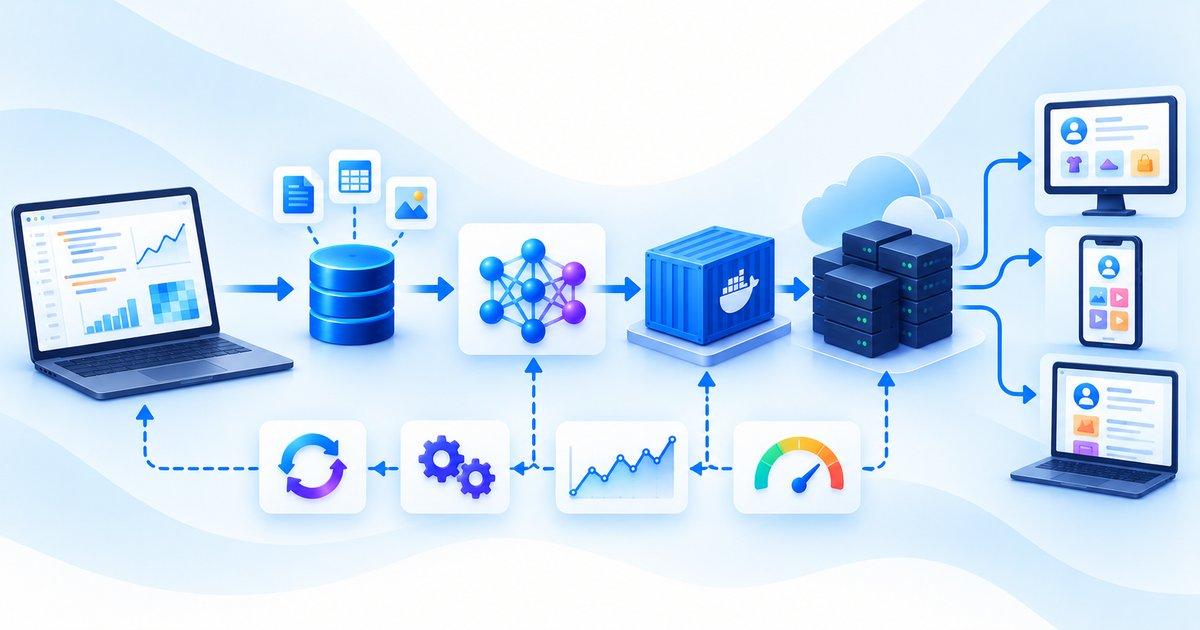
This creates an architecture in which the physical machine produces observations, the digital twin integrates those observations into a representation of system state, and machine learning provides estimates about conditions that are difficult or expensive to measure directly.
The result is much more than a digital copy of sensor readings.
Digital Twins Depend on Reliable Physical Data
The digital representation is only as reliable as the information connecting it to the physical system.
Sensors can produce noisy measurements. Instruments can become miscalibrated. Networks can introduce delays. Data streams can become misaligned. Some sensors can fail entirely.
Even a highly sophisticated ML model may produce unreliable predictions if the underlying measurements do not accurately represent the physical asset.
This makes data engineering a foundational part of digital-twin systems.
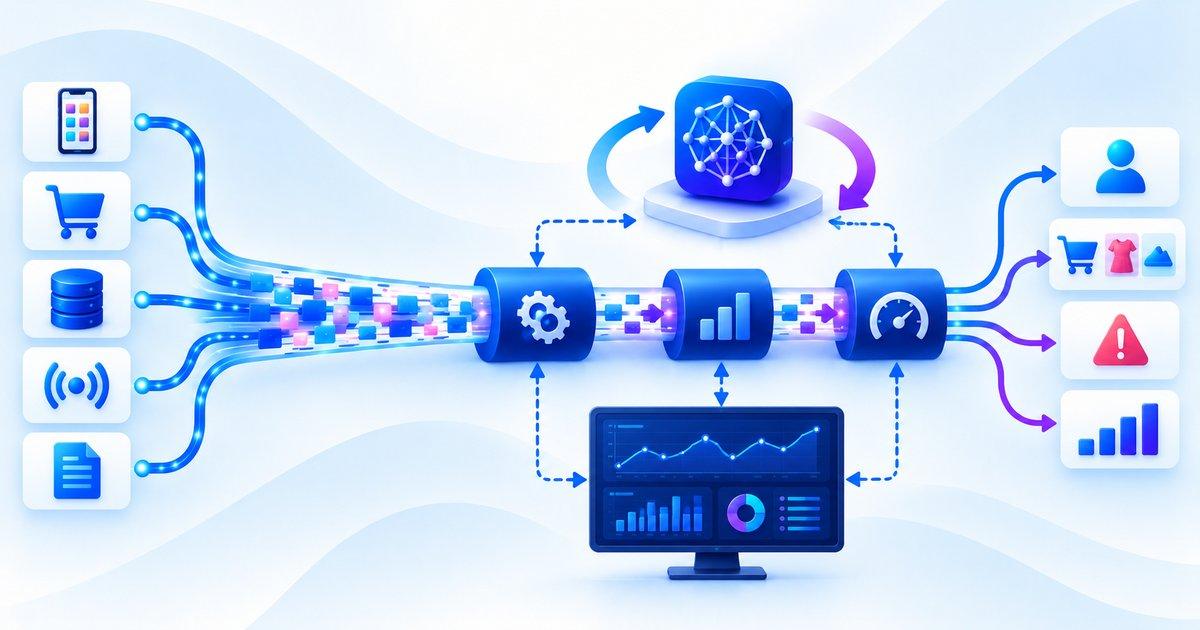
Engineers need reliable pipelines for ingestion, synchronization, validation, preprocessing, storage, and feature generation. Time alignment is particularly important because the relationship between measurements can depend on exactly when they were recorded.
For example, temperature, vibration, and machine load measured several seconds apart may not represent the same physical state.
The quality of the digital twin therefore depends not only on the sophistication of its ML models but also on the integrity of its data infrastructure.
“The Journey of a Dataset: From Raw Data to Production ML” is directly relevant to this principle because measurements from physical systems must travel through a complete data lifecycle before they become reliable model inputs.
Key Takeaway
Machine learning transforms digital twins from passive digital representations into predictive, adaptive models of physical systems. ML can estimate hidden states, detect degradation, forecast future behavior, and support what-if analysis, while physics-based models provide structure and constraints. The effectiveness of the twin ultimately depends on maintaining a reliable connection between the physical asset, its streaming data, its computational state, and the machine learning models responsible for prediction and inference.
Section 2: How Machine Learning Learns the Behavior of Physical Systems
A digital twin becomes useful only when its representation of the physical system is sufficiently accurate to support prediction and decision-making. Creating that representation is challenging because physical systems do not behave like static datasets. Machines operate continuously, environments change, components degrade, and measurements arrive as streams rather than isolated observations. The meaning of one measurement can also depend on what happened before, what the system is doing now, and what operating conditions are expected next.
Machine learning provides a way to learn these patterns from historical and real-time observations. Instead of requiring engineers to manually encode every possible relationship, ML models can learn how a physical system behaves under different states and operating conditions. The resulting models can estimate hidden conditions, detect deviations from expected behavior, forecast future states, and accelerate expensive simulations. For many digital-twin applications, this ability to learn from both time-series observations and simulated scenarios is what transforms a digital representation into a predictive system.
Learning From Time-Series Sensor Data
Most physical systems continuously produce sensor observations. A manufacturing machine may generate vibration, temperature, pressure, motor-current, speed, torque, and energy-consumption measurements. A wind turbine may report wind speed, rotor speed, generator temperature, and blade-related measurements. A building can produce streams describing occupancy, indoor temperature, humidity, power consumption, and HVAC activity.
These observations are fundamentally temporal.
The value of a sensor measurement depends partly on its history. A temperature of 80 degrees may be normal during one operating state and abnormal during another. A sudden increase may be more informative than a stable high value. A gradual trend can indicate degradation even when every individual measurement remains inside a conventional threshold.
Machine learning can model these temporal patterns.
Time-series models, temporal neural networks, state-space approaches, and other sequence-oriented techniques can learn relationships between current observations and previous system states. The model is effectively learning a trajectory rather than simply mapping one input row to one output.
This allows the digital twin to represent questions such as:
What is the current physical state?
How has that state changed?
Is the change consistent with normal operation?
Where is the system likely to move next?
These questions are fundamental to maintaining a useful computational representation of an evolving physical asset.
Capturing Different Operating Regimes
Physical systems rarely have one universal operating behavior.
A manufacturing machine may behave differently during startup, steady production, idle periods, shutdown, and overload. An aircraft system can exhibit different characteristics during takeoff, cruising, descent, and landing. A building behaves differently when occupied than when empty.
This creates operating regimes.
The same sensor value can have completely different implications depending on the current regime. A vibration level that is normal during startup could indicate a problem during steady-state operation.
Machine learning systems therefore need to understand context.
One approach is to explicitly represent operating mode as an input feature. Another is to build models that can infer the current regime from the observed data. More sophisticated systems can use separate models for different regimes or incorporate regime transitions into a larger state-estimation framework.
This is important because an ML model trained without contextual information may learn relationships that appear statistically valid but are physically incorrect.
The digital twin provides an opportunity to make the current operating state part of the model's reasoning.
Adapting as Physical Systems Change
Physical systems evolve over time.
Components wear down. Maintenance changes equipment condition. Software updates modify behavior. Production processes change. Environmental conditions vary.
A static model can therefore become less accurate as the underlying system changes.
Machine learning can support adaptation through periodic retraining, online learning, transfer learning, or state-aware model updates.
However, automatic adaptation needs strong controls.
A temporary sensor problem should not cause the twin to permanently change its understanding of the physical system. An unusual operational event should not necessarily become the new definition of normal behavior.
This makes model monitoring, data-quality checks, validation, versioning, and controlled retraining essential.
“Online Machine Learning: How Models Learn From Data as It Arrives” provides useful context for this challenge because continuously updating models must distinguish meaningful changes in the environment from transient or corrupted observations.
Key Takeaway
Machine learning enables digital twins to learn the temporal behavior of physical systems from sensor observations, operating regimes, historical failures, simulations, and evolving system states. The strongest approaches combine data-driven learning with physics-based constraints and simulation, allowing the twin to estimate hidden conditions, detect anomalies, forecast future states, and approximate expensive simulations. The central challenge is maintaining alignment between the learned digital representation and the continuously changing physical reality.
Section 3: Using AI-Powered Digital Twins for Prediction, Simulation, and Optimization
A digital twin becomes significantly more valuable when it moves beyond simply representing what is happening in a physical system and begins helping engineers determine what could happen next. Machine learning makes this transition possible by allowing a digital twin to estimate future states, detect emerging problems, simulate alternative conditions, and support optimization decisions. Instead of using AI only to analyze historical sensor data, organizations can use the combination of machine learning and digital simulation to explore potential actions before applying them to the physical environment.
This creates a powerful distinction between prediction and intervention. A conventional ML model may estimate what is likely to happen under current conditions. An AI-powered digital twin can potentially evaluate how the system might respond when operating conditions are changed.
From Prediction to What-If Analysis
Suppose a manufacturer wants to increase the operating speed of a production line. A conventional predictive model can use historical observations to estimate throughput or equipment behavior, but its predictions may be unreliable if the proposed operating condition has rarely occurred in the historical data.
A digital twin can approach the problem differently.
The twin maintains a computational representation of the equipment, operating state, and known physical constraints. Machine learning can estimate behavior where explicit models are incomplete, while simulation can evaluate the proposed change.
The engineer can then ask:
What happens if production speed increases?
What happens if a component begins degrading?
What happens if cooling capacity decreases?
What happens if demand changes suddenly?
These are intervention-oriented questions rather than simple forecasting problems.
The value of the digital twin comes from creating a computational environment in which these scenarios can be evaluated before changes are introduced into the physical system.
Simulating Alternative Operating Conditions
Digital twins can represent multiple possible future states of a physical system.
Consider a manufacturing facility attempting to increase throughput. Engineers need to understand not only whether output will rise but whether increased production will raise equipment temperatures, increase vibration, accelerate component degradation, or create downstream bottlenecks.
The twin can simulate alternative operating conditions and estimate their consequences.
Machine learning can make this process more practical by approximating complex relationships that would otherwise require expensive calculations.
Instead of running a high-fidelity physical simulation for every possible parameter combination, an ML-based surrogate can provide rapid estimates across a large search space.
This allows engineers to evaluate many possible configurations and narrow the options before conducting physical experiments.
The twin effectively becomes a digital experimentation environment.
Predictive Maintenance and Remaining Useful Life
Predictive maintenance is one of the strongest applications of AI-powered digital twins because maintenance decisions are inherently forward-looking.
A conventional maintenance model may predict the probability of equipment failure. A digital twin can go further by maintaining an evolving representation of equipment health and estimating how that state may develop under different operating conditions.
Machine learning can identify degradation patterns from vibration, temperature, pressure, current, load, and historical maintenance data.
The twin can incorporate these predictions into an evolving estimate of component condition.
Engineers can then ask whether a component should be replaced immediately, whether it can safely remain operational, or whether changing the operating conditions could extend its useful life.
This transforms predictive maintenance from a simple alerting mechanism into a decision-support system.
The goal is no longer simply to detect a potential problem. It is to understand the likely trajectory of the asset and determine the most valuable intervention.
Key Takeaway
AI-powered digital twins enable organizations to move from prediction toward simulation and decision support. Machine learning can estimate future physical states, support predictive maintenance, accelerate expensive simulations, and help evaluate alternative operating strategies. Their greatest value emerges when predictions are connected to what-if analysis and optimization, but engineers must carefully manage extrapolation, uncertainty, validation, and safety when using digital models to guide real-world interventions.
Section 4: Why Machine Learning for Digital Twins Matters for the Future of AI
Machine learning for digital twins represents a broader shift in how artificial intelligence can interact with the physical world. Traditional machine learning systems generally learn from historical datasets and generate predictions about future events. AI-powered digital twins introduce another layer: they maintain a computational representation of a physical system that can evolve over time, incorporate real-world observations, simulate alternative conditions, and support operational decisions. This makes digital twins particularly important as AI expands into manufacturing, energy, transportation, robotics, infrastructure, logistics, and other domains where decisions ultimately affect physical systems.
Moving From Prediction to Physical Intelligence
The most important change introduced by digital twins is the movement from isolated prediction toward system-level understanding.
A conventional machine learning model may predict whether a machine is likely to fail. A digital twin attempts to represent the machine's current condition, its operating environment, historical behavior, and potential future states. Machine learning can contribute by estimating hidden conditions, identifying anomalies, forecasting degradation, and evaluating possible outcomes.
This creates a richer form of machine intelligence.
The system is no longer operating only on abstract historical records. Its predictions correspond to an evolving physical state.
That distinction becomes increasingly important for robotics and autonomous systems. An AI system operating a robot, vehicle, or industrial process needs information not only about what has happened but also about current state, constraints, possible future conditions, and the consequences of different actions.
A digital twin can provide that computational context.
Scaling Digital Twins Across Complex Systems
The future of digital twins is unlikely to involve isolated representations of individual machines alone. Many physical environments are composed of interconnected systems.
A factory contains machines, production lines, utilities, storage systems, and workers. A supply chain contains suppliers, warehouses, transportation networks, and customers. A city contains buildings, roads, energy systems, communication infrastructure, and public services.
These systems can potentially be represented through interconnected digital twins.
A machine-level twin can provide information to a production-line twin. Several production lines can contribute to a factory-level representation. Factory-level information can then interact with supply-chain or energy models.
Machine learning can operate at multiple levels of this hierarchy.
This introduces significant opportunities for system-level optimization, but it also creates substantial engineering requirements around data synchronization, identifiers, interfaces, model consistency, and temporal alignment.
The digital twin ecosystem therefore becomes a distributed modeling system rather than a single model.
Digital Twins and Edge AI
Many physical environments require extremely fast decisions. Industrial equipment, robots, autonomous vehicles, and embedded devices may not be able to depend entirely on cloud-based inference.
This creates an important role for edge AI.
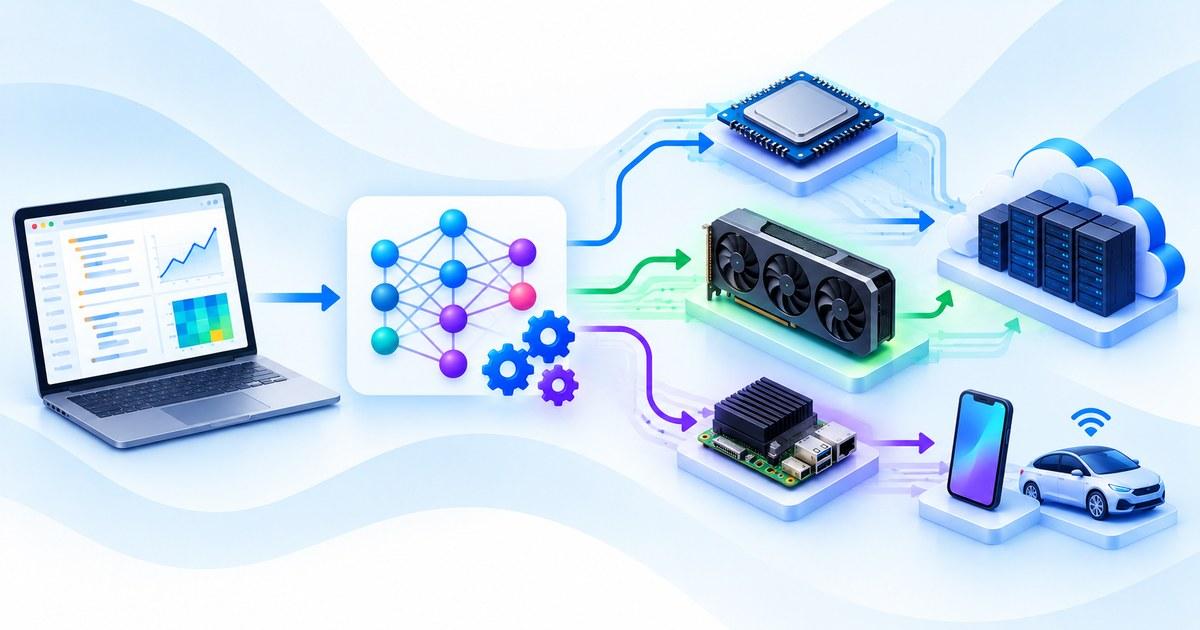
A digital twin can be distributed across multiple computational layers. Real-time state estimation or anomaly detection may occur close to the physical device, while more computationally intensive simulation and optimization can occur in centralized infrastructure.
This hybrid architecture allows organizations to balance latency, network bandwidth, computational capacity, and model complexity.
For example, an industrial machine could locally detect a rapidly developing anomaly while a larger cloud-based digital twin performs more detailed simulation and maintenance analysis.
The edge and cloud components can therefore work together rather than requiring every computation to occur in one location.
The Challenge of Model Interoperability
As digital-twin environments become larger, organizations may need to integrate many models developed by different teams.
One model may represent equipment degradation. Another may estimate energy consumption. A third may predict demand. Yet another may represent logistics or production capacity.
For these models to operate as one digital environment, they need consistent definitions of entities, timestamps, states, and interfaces.
This creates a data and systems engineering challenge.
A model cannot reliably consume another model's output if the underlying semantics are ambiguous or the data represents a different point in time.
Continuous Optimization of Physical Systems
One of the longer-term opportunities is turning digital twins into continuous optimization environments.
A building twin could continuously evaluate HVAC configurations based on occupancy and weather conditions.
A manufacturing twin could optimize production settings while considering throughput, energy, and equipment health.
An energy twin could balance generation, storage, and demand.
A logistics twin could evaluate routing strategies as transportation conditions change.
The computational loop becomes:
Observe → Predict → Simulate → Optimize → Act → Observe Again
Machine learning supports the prediction component, while simulation and optimization determine which scenarios should be explored.
This creates a potentially powerful closed-loop architecture.
However, automated decisions affecting physical systems require much stricter safeguards than ordinary software recommendations. Constraints, validation rules, action limits, and human oversight become essential wherever model outputs can directly influence physical behavior.
Learning Across Related Physical Assets
Organizations often operate many similar physical assets.
An industrial company may have hundreds of machines. An airline may operate a large fleet of similar aircraft. An energy provider may maintain many turbines or other generation assets.
Each asset produces its own history, but the underlying systems may share common patterns.
Machine learning can potentially learn across these assets while maintaining asset-specific state.
This provides an important benefit for newer or less-observed assets. A newly deployed machine may have limited historical data, but the model can use information learned from similar machines to establish useful initial estimates.
This connects naturally to “Transfer Learning Beyond LLMs: How Knowledge Moves Between ML Tasks,” because digital-twin systems can benefit from transferring knowledge across related physical assets while adapting predictions to the conditions of each individual system.
Key Takeaway
Machine learning-powered digital twins provide a foundation for AI systems that can understand and reason about physical systems over time. Their importance extends from predictive maintenance and industrial optimization to edge AI, robotics, energy, logistics, and autonomous infrastructure. The strongest digital twins will combine real-time data, machine learning, physics, simulation, optimization, and uncertainty management while continuously validating the digital representation against the physical world.
Conclusion
Machine learning for digital twins represents a major evolution in how AI can model and interact with the physical world.
Traditional machine learning systems generally learn from historical data and produce predictions about future outcomes. Digital twins introduce a richer concept: a continuously updated computational representation of a physical asset, process, or environment. When machine learning is integrated into that representation, the twin can estimate hidden states, detect anomalies, forecast future behavior, simulate possible conditions, and support decisions that affect the physical system.
This shift is important because physical systems are rarely static or fully observable.
A machine may contain internal conditions that cannot be measured directly. A manufacturing line may operate under multiple regimes. An aircraft component may gradually degrade. A building may respond differently to weather and occupancy. A supply chain may change as demand, inventory, transportation, and supplier conditions evolve.
Machine learning can learn these relationships from sensor data, historical observations, simulations, and operational context.
The strongest digital twins, however, will not rely exclusively on machine learning.
Physics-based models provide fundamental constraints and structural understanding. Simulation can represent conditions that are poorly represented in historical data. Machine learning can capture nonlinear relationships, empirical behavior, and discrepancies between expected and observed system behavior.
Combining these approaches creates hybrid digital twins that can be more useful than either purely physical or purely data-driven systems.
One of the most important capabilities of a digital twin is the ability to move beyond prediction toward what-if analysis.
A conventional model may estimate what is likely to happen under current conditions. An AI-powered digital twin can potentially evaluate what might happen if an engineer changes production speed, modifies operating parameters, delays maintenance, changes energy usage, or introduces a new configuration.
This enables organizations to perform digital experimentation before making expensive or risky physical changes.
Predictive maintenance provides a clear example. Instead of simply predicting that a machine may fail, the twin can maintain an evolving representation of equipment health, estimate future degradation, and help evaluate whether continued operation, reduced load, inspection, or component replacement is the most appropriate action.
The same principle applies to energy, logistics, infrastructure, robotics, and manufacturing.
However, the ability to simulate unfamiliar conditions creates a critical limitation: the simulation-to-reality gap.
Frequently Asked Questions
1. What is a digital twin?
A digital twin is a computational representation of a physical object, process, asset, or environment that is connected to real-world data and can be updated as the physical system changes.
2. How does machine learning improve a digital twin?
Machine learning can help a digital twin estimate hidden system states, detect anomalies, forecast future conditions, predict failures, learn nonlinear relationships, and accelerate computationally expensive simulations.
3. What is the difference between a digital twin and an ML model?
An ML model usually performs a specific predictive or analytical task. A digital twin represents a broader physical system and can combine machine learning, sensor data, physics-based models, simulation, system state, and operational information.
4. Does a digital twin have to use machine learning?
No. Digital twins can be built using physics-based models, simulations, rules, sensor data, or combinations of these approaches. Machine learning is particularly valuable when system behavior is complex, nonlinear, partially observable, or difficult to model explicitly.
5. What is a machine learning-powered digital twin?
A machine learning-powered digital twin uses ML models within the digital-twin architecture to learn physical-system behavior, estimate current state, identify anomalies, forecast future states, or support optimization and simulation.
6. What types of physical systems can have digital twins?
Digital twins can represent manufacturing equipment, factories, buildings, vehicles, aircraft, energy systems, supply chains, infrastructure, robotics platforms, and other physical systems that can be represented computationally and connected to operational data.
7. How are digital twins used for predictive maintenance?
Machine learning can analyze sensor patterns and historical maintenance information to estimate equipment health, detect degradation, predict failure risk, or estimate remaining useful life. The digital twin can then use those predictions to support maintenance decisions.
8. Can digital twins predict equipment failures?
They can estimate failure risk when sufficient representative data and appropriate models are available. However, failures are often rare, and predictions can become less reliable when operating conditions differ significantly from those represented in training data.
9. What is a hybrid digital twin?
A hybrid digital twin combines physics-based modeling with data-driven techniques such as machine learning. Physics provides structural knowledge and constraints, while machine learning captures empirical patterns or residual behavior that may be difficult to model explicitly.
10. What is a surrogate model in a digital twin?
A surrogate model is a machine learning model trained to approximate the output of a computationally expensive simulation. It can provide much faster predictions, enabling engineers to evaluate many scenarios without repeatedly running the full simulation.
11. How do digital twins support what-if analysis?
A digital twin can represent the current state of a physical system and simulate alternative operating conditions or interventions. Engineers can then compare potential outcomes before applying changes to the real system.
12. What is the simulation-to-reality gap?
The simulation-to-reality gap is the difference between the behavior predicted by a digital model and the behavior observed in the physical system. Continuous calibration with real-world data helps reduce this gap.
13. Can digital twins operate using real-time data?
Yes. Sensor streams and other operational data can continuously update the digital representation, allowing the twin to reflect changing system conditions and support near-real-time prediction and decision-making.
14. What are the biggest challenges in machine learning for digital twins?
Major challenges include sensor noise and failure, missing data, time synchronization, changing physical conditions, rare events, simulation-to-reality differences, uncertainty, model drift, system interoperability, computational cost, and safely connecting predictions to physical actions.
15. Why are machine learning and digital twins important for the future of AI?
Together, they allow AI systems to move beyond analyzing historical data toward maintaining computational representations of evolving physical systems. This can enable predictive maintenance, simulation, optimization, autonomous decision support, and increasingly sophisticated AI applications across manufacturing, energy, transportation, robotics, logistics, and infrastructure.