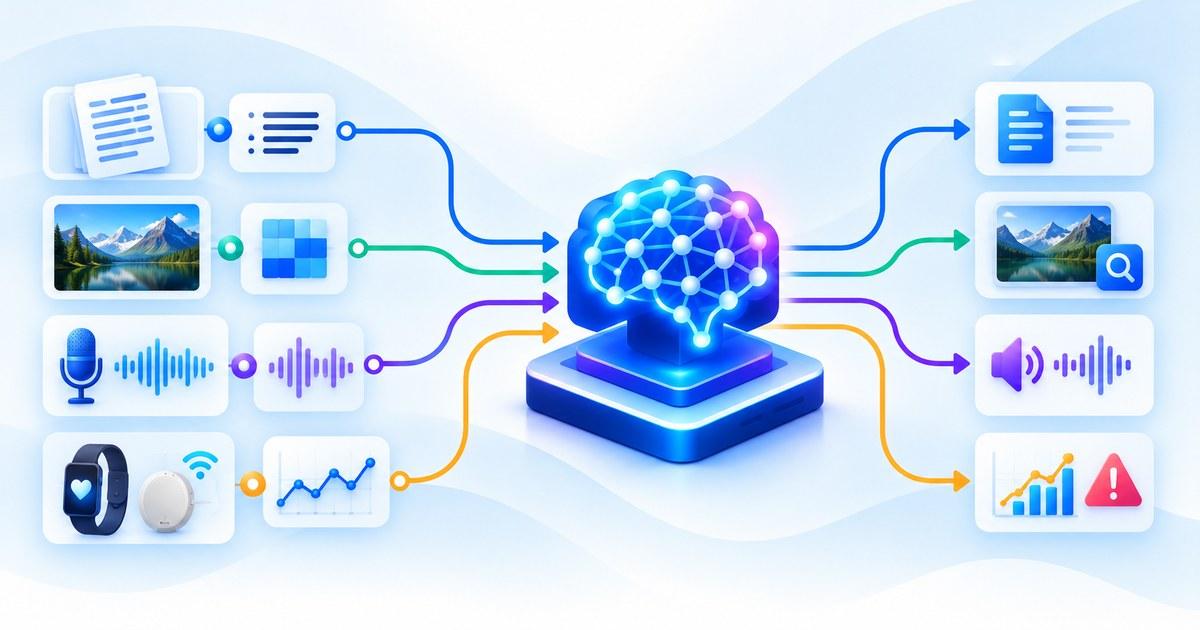

Section 1: Why Structured Data Is Ready for Self-Supervised Learning
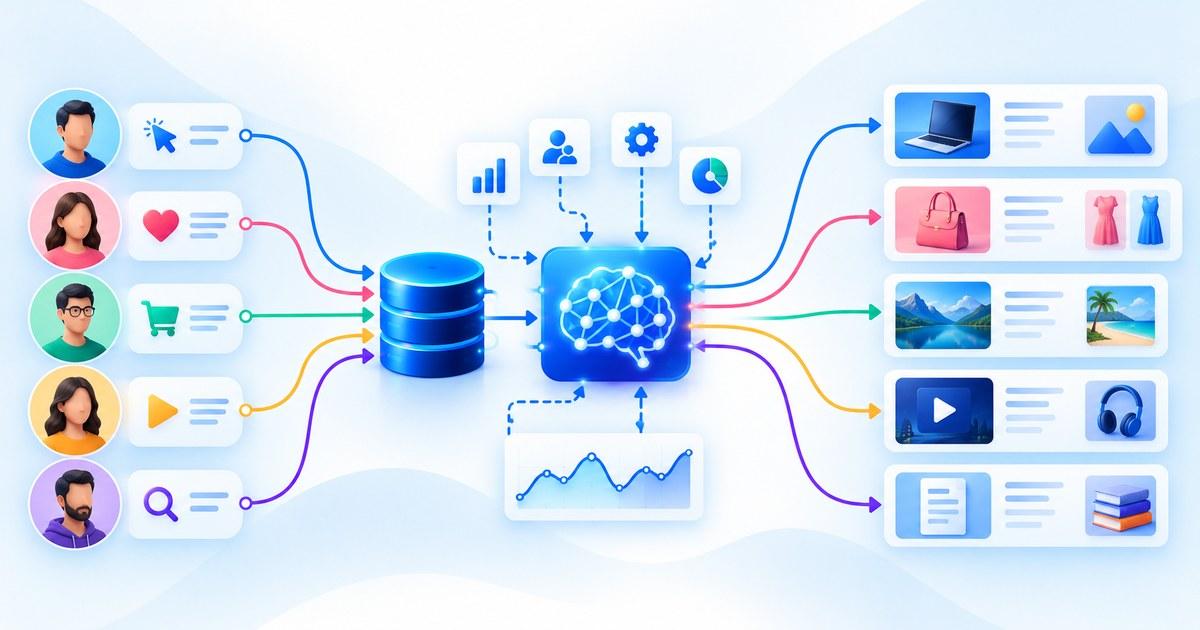
Structured data is one of the most abundant sources of information available to modern organizations. Enterprises continuously generate customer records, transactions, product information, application events, financial data, operational measurements, sensor readings, and business-process histories. Yet only a fraction of this information typically has explicit labels that can be used directly for supervised machine learning. This creates a fundamental imbalance: organizations may possess millions or billions of structured observations while having only a relatively small number of examples with trustworthy task-specific labels.
That imbalance is one of the strongest motivations for self-supervised learning for structured data. Instead of requiring humans to label every training example, self-supervised methods create learning signals from information already contained within the dataset. The model can hide a feature and predict it, reconstruct corrupted records, learn relationships among entities, or predict future events from historical context. In each case, the data itself provides the supervision.
The Label Bottleneck in Structured Machine Learning
Consider a financial institution with years of transaction data. Each record may contain transaction amount, merchant, time, location, device information, account characteristics, and other attributes. The institution may have billions of transactions, but only a small percentage may have been reviewed and confirmed as fraudulent.
A traditional supervised fraud model can only learn directly from the labeled examples available for training. The remaining transactions may still contain valuable information about customer behavior, merchant relationships, transaction patterns, and normal operating conditions, but those observations are often underutilized because they lack explicit labels.
The same issue appears in industrial machine learning. A manufacturing company may have millions of hours of sensor data describing vibration, temperature, pressure, load, and energy usage, while only a small number of records correspond to confirmed equipment failures.
The problem is not insufficient data.
It is insufficient task-specific supervision.
Self-supervised learning changes the role of that unlabeled information. Rather than waiting for a human to annotate every observation, the model can use the structure already present in the records to learn general representations.
Creating Supervision Without Human Labels
The central idea behind self-supervised learning is to construct a prediction problem from the original data.
Suppose a structured customer record contains age, region, income, account tenure, product category, and transaction frequency. A self-supervised training process can hide the product category and ask the model to predict it using the other available fields.
The original product category becomes the training target automatically.
No human annotation is required.
The same principle can be applied to numerical data. A training procedure can mask a numerical value and ask the model to reconstruct it from the remaining variables. It can also corrupt part of a record and train the model to recover the original representation.
The model is therefore forced to learn relationships among the observed variables.
This is different from simply using an autoencoder or filling in missing values as a preprocessing step. The broader objective is to create a representation that captures useful structure that can later transfer to downstream prediction tasks.
From Feature Engineering to Representation Learning
Traditional tabular machine learning often depends heavily on manual feature engineering.
Engineers may calculate rolling averages, transaction counts, ratios, time differences, frequency statistics, categorical encodings, and feature interactions. These transformations can be extremely effective, but they require domain understanding and often need to be redesigned for every new prediction task.
Self-supervised representation learning introduces another possibility.
Instead of manually specifying every useful relationship, engineers can train a model to learn general representations from large amounts of structured data.
The resulting representation can then be used by downstream models.
This does not make feature engineering obsolete. Domain-specific transformations can still contain important information, particularly when raw data does not express business concepts directly.
The difference is that some of the representational burden can shift from manual engineering toward learned representations.
Why Enterprise Data Is Particularly Suitable
Enterprise environments contain enormous quantities of data that are generated as a natural consequence of business operations.
CRM systems record customer interactions.
ERP systems record transactions and operational workflows.
Data warehouses combine information across departments.
Application logs capture user and system behavior.
Industrial platforms generate continuous sensor streams.
Much of this data is never manually labeled for machine learning.
Self-supervised learning provides a way to turn these existing data assets into pretraining resources.
A model can learn broad structural patterns from historical enterprise records and later be adapted to downstream problems such as churn prediction, fraud detection, demand forecasting, anomaly detection, customer segmentation, or risk classification.
This creates the possibility of reusable structured-data representations rather than independent models that learn each task entirely from scratch.
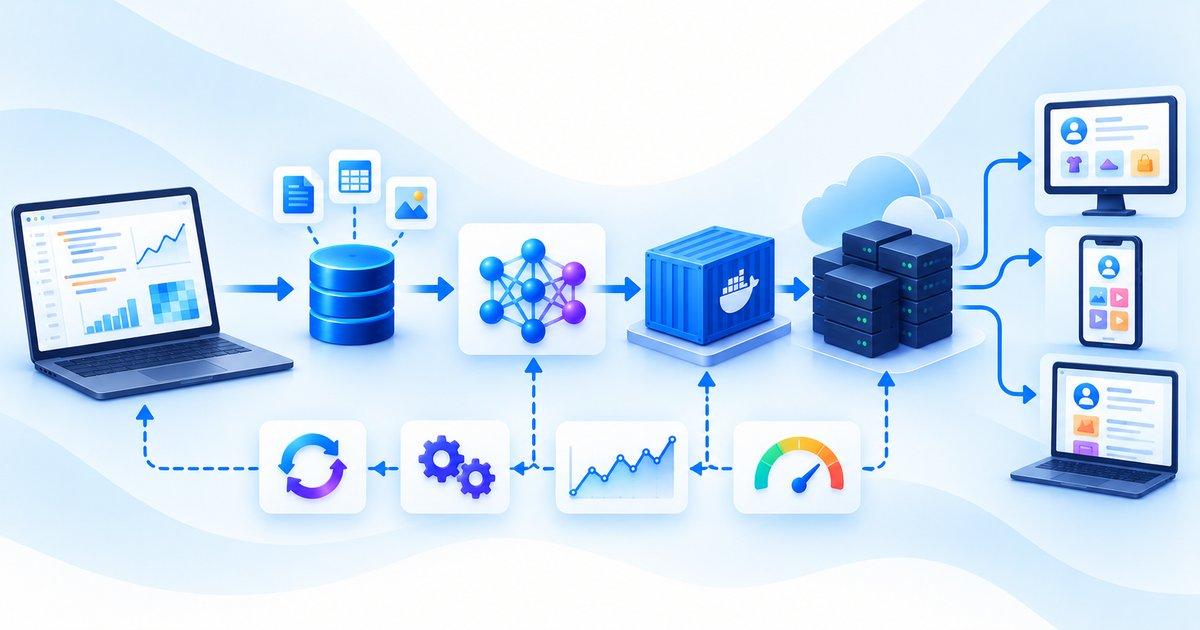
“The Journey of a Dataset: From Raw Data to Production ML” provides a useful connection here because self-supervised learning increases the value of raw data before it has been converted into a conventional labeled training set.
Key Takeaway
Structured datasets contain far more information than their available labels suggest. Self-supervised learning allows models to extract useful signal from this unlabeled data by constructing prediction and reconstruction tasks directly from the dataset. This can transform large enterprise data stores into pretraining resources, reduce dependence on expensive labels, and create reusable representations for downstream ML tasks. The central challenge is designing self-supervised objectives that capture meaningful structure across numerical, categorical, temporal, and relational data without allowing the model to exploit trivial shortcuts.
Section 2: How Self-Supervised Learning Works on Structured and Tabular Data
Self-supervised learning for structured data depends heavily on how the training objective is designed. Unlike supervised learning, where the target variable is explicitly provided, self-supervised learning must create a meaningful prediction task from the data itself. The objective needs to encourage the model to learn useful relationships among features, entities, and time rather than memorizing trivial patterns.
This makes the pretraining objective one of the most important engineering decisions in structured-data self-supervised learning.
Masked Feature Modeling
One of the most intuitive approaches is masked feature modeling. The model receives a structured record in which one or more values have been deliberately hidden and must infer those missing values from the remaining information.
Consider a customer record containing age, location, income, account tenure, product category, and purchase frequency. During pretraining, the product category can be masked, and the model is asked to reconstruct it from the other fields.
The original value provides the learning signal automatically.
For numerical variables, the model can similarly be asked to reconstruct a hidden measurement. For categorical features, the objective can behave like classification. For mixed-type tables, different fields can use different reconstruction objectives.
The key requirement is that the masked field should be predictable from meaningful relationships within the remaining information.
If the target can be reconstructed through a trivial identifier or another leakage-prone feature, the model may learn a shortcut rather than a useful representation.
Denoising Structured Records
A related approach is denoising.
Instead of simply hiding a field, the training process deliberately corrupts part of the structured input and asks the model to recover the original record or representation.
Corruption can take different forms depending on the feature type. A numerical measurement can be perturbed, a categorical value can be replaced with an unknown or altered value, or portions of the record can be removed.
The purpose is to force the model to understand the relationships among the remaining variables well enough to reconstruct the original information.
This can be particularly relevant to enterprise data because real production datasets often contain missing values, noisy measurements, inconsistencies, and incomplete records.
A model that learns to reconstruct clean structure from imperfect input can develop representations that are more robust to these conditions.
The corruption process, however, must be designed carefully. If the transformation destroys information in a way that would never occur naturally, the model may learn to solve an artificial task that has little relevance to downstream applications.
Self-Supervised Learning Is a Representation Strategy
The central idea is to stop thinking of pretraining as a standalone prediction problem.
The goal is to create a useful internal representation of structured data.
That representation should capture relationships among features, entities, and time in a way that downstream models can exploit.
This is where self-supervised learning differs fundamentally from conventional data preprocessing.
The model is not merely cleaning or transforming the dataset.
It is learning a reusable representation of its structure.
That representation can then become a foundation for multiple machine learning applications.
“Transfer Learning Beyond LLMs: How Knowledge Moves Between ML Tasks” provides a useful conceptual connection because the key benefit of structured-data pretraining is the ability to transfer information learned from broad unlabeled data into downstream tasks with limited supervision.
Key Takeaway
Self-supervised learning for structured data can use masked feature modeling, denoising, contrastive learning, temporal prediction, entity-level learning, and cross-table relationships to generate supervision without human labels. The critical engineering task is designing objectives and transformations that force the model to learn meaningful structure rather than exploit shortcuts. Pretraining becomes valuable when those learned representations transfer effectively to downstream tasks and reduce dependence on large task-specific labeled datasets.
Section 3: Turning Self-Supervised Representations Into Useful Machine Learning Models
The value of self-supervised learning for structured data ultimately depends on what happens after pretraining. Learning to reconstruct masked columns, predict future events, or identify relationships between records is useful only when the resulting representation helps solve real downstream problems. The central promise of self-supervised learning is that a model can first learn general structure from large quantities of unlabeled data and then transfer that knowledge to tasks where labeled examples are limited.
This creates a different machine learning workflow from traditional supervised training. Instead of starting with a small labeled dataset and asking the model to learn every useful representation directly from it, engineers can first expose the model to much larger amounts of unlabeled structured data. A smaller supervised dataset can then specialize the learned representation for a particular business problem.
Fine-Tuning With Limited Labels
One of the most important applications of self-supervised representations is fine-tuning with limited labeled data.
Imagine an organization with millions of customer records but only a small labeled dataset for churn prediction. Training a supervised model from scratch forces the model to learn both a useful representation of customer behavior and the specific relationship between those behaviors and churn using only the labeled examples.
A pretrained representation changes the problem.
The model can first learn broad patterns from the organization's unlabeled customer data. It may learn relationships among purchase frequency, account history, product usage, support activity, and temporal behavior. A smaller labeled dataset can then teach the model which of those patterns are relevant to churn.
The supervised stage becomes a specialization process rather than a complete learning process.
This can be particularly useful when labels are expensive, delayed, or difficult to collect. Instead of requiring tens or hundreds of thousands of manually reviewed examples before building a useful model, organizations may be able to begin with a much smaller labeled sample.
Comparing Against Strong Tabular Baselines
Self-supervised learning should always be compared against credible supervised alternatives.
Gradient-boosted decision trees remain highly effective for many structured-data problems. A self-supervised neural architecture may require significantly more compute, more complex infrastructure, and additional pretraining while delivering only a small downstream improvement.
That may not justify the added complexity.
On the other hand, the comparison can look very different when labeled data is extremely limited or when the same pretrained representation supports multiple tasks.
Engineers should therefore compare approaches across several dimensions:
predictive quality, label efficiency, training cost, inference cost, implementation complexity, and transferability.
Representation Drift
A pretrained representation can become stale as the underlying structured data changes.
New products appear.
Customer behavior evolves.
New categories enter the dataset.
Business processes change.
Schema definitions are modified.
A representation learned from historical data may therefore become less useful over time.
This creates a direct connection between self-supervised learning and adaptive machine learning.
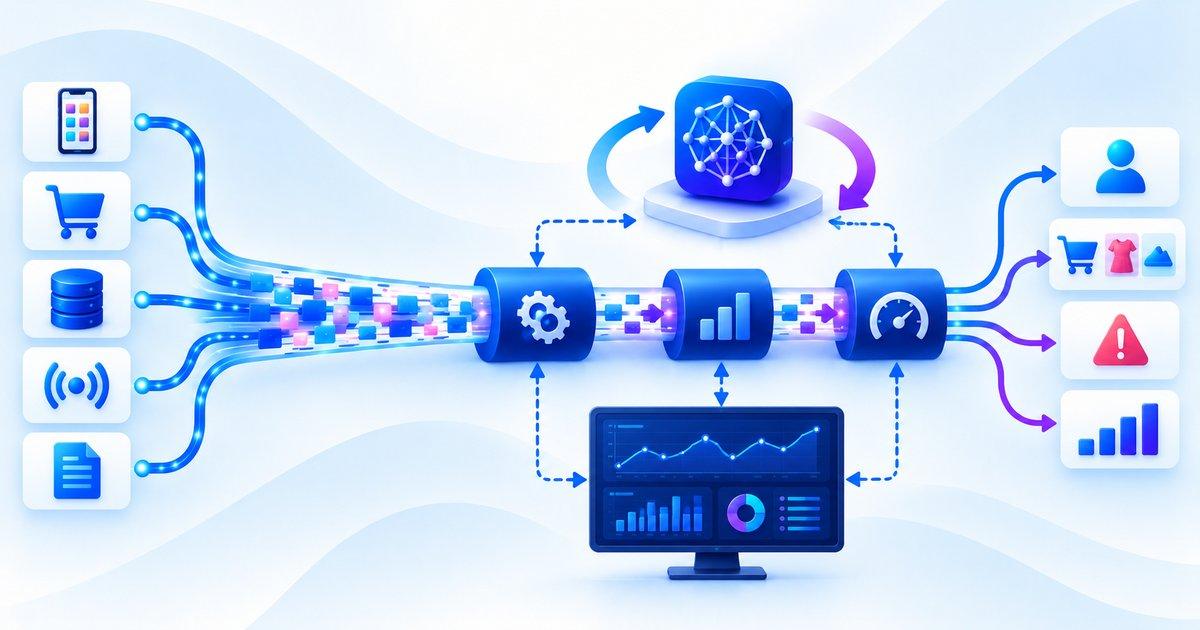
“Adaptive Machine Learning: How Models Respond to Changing Environments” examines how ML systems can maintain alignment with changing production environments. The same principle applies to pretrained representations: they may require continued pretraining, periodic refreshes, or downstream adaptation when the underlying data distribution changes substantially.
Deciding When to Refresh the Representation
Not every change requires complete pretraining from scratch.
A relatively small environmental shift may be handled through downstream fine-tuning.
A moderate change may justify continued pretraining using newer unlabeled records.
A major schema or population change may require a more substantial representation refresh.
The decision should be based on evidence.
Engineers can compare representation quality over time, monitor downstream model performance, inspect distribution changes, and evaluate whether new data contains structural patterns that were absent during pretraining.
This creates a more targeted maintenance strategy than automatically retraining on a fixed schedule.
Self-Supervised Learning and Feature Engineering
Self-supervised representations do not eliminate traditional feature engineering.
Domain-specific features can still be extremely valuable.
A feature such as transaction velocity, time since previous activity, rolling purchase count, or equipment operating duration may encode a meaningful business concept that is difficult for a model to infer efficiently from raw records.
The practical architecture can therefore combine engineered features with learned representations.
In some cases, the self-supervised model consumes engineered features as inputs.
In other cases, its embeddings are combined with conventional features before being passed into a downstream model.
The objective is not to replace engineering expertise but to complement it.
Key Takeaway
The value of self-supervised learning becomes visible when pretrained representations transfer successfully to downstream tasks. Engineers should measure label efficiency, compare fine-tuning with simpler approaches such as linear probing, test representation reuse across multiple tasks, prevent temporal leakage and shortcut learning, and benchmark against strong supervised baselines. A useful representation is not defined by its pretraining loss alone; it is defined by how effectively it improves real downstream ML under realistic labeling and production constraints.
Section 4: Why Self-Supervised Learning Could Change the Future of Structured Machine Learning
Self-supervised learning has already changed how engineers think about learning from large collections of unlabeled information. Its application to structured data could create a similar shift, particularly in organizations where enormous quantities of tables, transactions, events, logs, and time-series records exist but high-quality labels remain scarce.
The potential change is larger than simply introducing another neural-network architecture. Self-supervised learning can alter the entire development workflow for structured machine learning. Instead of treating every prediction problem as an independent project that begins with feature engineering and labeled examples, organizations can increasingly treat unlabeled data as a reusable learning asset.
From Label-First Machine Learning to Representation-First Machine Learning
Traditional supervised machine learning generally begins with a specific business question.
An organization wants to predict customer churn, detect fraudulent transactions, forecast demand, estimate credit risk, or identify equipment failures. Engineers define the target variable, collect labeled examples, engineer features, select a model, and optimize performance.
This approach works well when labels are abundant and inexpensive.
In many enterprise environments, however, labels are the bottleneck.
A company may have millions of customer interactions but relatively few confirmed churn outcomes. A financial institution may process enormous transaction volumes but have a much smaller set of verified fraudulent cases. An industrial organization may collect years of sensor readings while only a small proportion of machine failures are accurately documented.
Self-supervised learning changes where the initial investment goes.
Instead of asking only how to obtain more labels, engineers can first ask how much structure can be learned from the unlabeled data itself.
This represents a shift from a label-first workflow to a representation-first workflow.
The objective becomes building a reusable understanding of the entities, events, relationships, and temporal patterns contained in the organization's data. Individual downstream models can then specialize that representation for particular tasks.
Structured Data Could Support Foundation Models Beyond Text
The rise of foundation models demonstrated the value of pretraining on large datasets before adapting models to individual tasks. Structured data creates an opportunity to apply similar thinking outside natural language and vision.
A structured-data foundation model does not necessarily need to resemble a language model internally.
Its pretraining objectives could involve reconstructing masked fields, learning representations of entities, predicting future events, modeling relationships among records, detecting anomalies, or learning interactions across multiple tables.
The underlying principle remains the same: learn reusable representations before solving a specific downstream problem.
This could eventually produce specialized foundation models for domains such as finance, healthcare operations, supply chains, manufacturing, cybersecurity, telecommunications, and enterprise software.
The major difference is that structured data contains additional forms of information that must be modeled carefully.
Tables contain schemas.
Relationships connect records.
Events occur over time.
Entities interact repeatedly.
Values can change state.
A useful structured-data foundation therefore needs to capture more than independent rows and columns.
Learning Across Tables, Relationships, and Time
One of the most interesting possibilities is moving beyond isolated tabular datasets.
Enterprise data is rarely contained inside a single table.
A customer may be connected to accounts, purchases, support tickets, subscriptions, products, devices, and communications. A machine may be connected to maintenance events, operating conditions, component replacements, and sensor streams.
Self-supervised learning can potentially use these relationships as additional learning signals.
The model could learn an embedding for an entity based not only on its attributes but also on the events and relationships surrounding it.
Time introduces another dimension.
Instead of simply learning what a record looks like, a model can learn how an entity changes over time. It can predict future states, reconstruct missing events, or distinguish normal behavioral transitions from unusual ones.
This creates representations that are potentially much closer to the underlying operational reality than static feature vectors.
Reducing the Cost of Building New ML Systems
The economic implications could be substantial.
Today, a new machine learning use case often requires another cycle of data preparation, feature development, labeling, experimentation, training, and validation.
A reusable self-supervised representation can reduce some of that duplication.
Suppose an organization has already pretrained a representation model on several years of operational data. A new team wants to develop a prediction system for a newly identified business problem.
Rather than building a complete representation pipeline from raw data, the team can start with the existing pretrained representation and focus primarily on the task-specific objective.
The result may be faster experimentation, smaller labeled datasets, and greater reuse of infrastructure.
However, this benefit depends on the representation being genuinely generalizable. A large pretrained model is not automatically cheaper or more valuable simply because it is reusable. Training, serving, storage, monitoring, and refresh costs still matter.
The economics must therefore be evaluated across the complete lifecycle, which connects naturally to “The Economics of Machine Learning: Measuring the True Cost of a Model.”
Better Label Efficiency Does Not Remove Data Quality Problems
One of the most important misconceptions is that self-supervised learning solves the data problem.
It does not.
Self-supervised systems can learn from unlabeled data, but they can also learn the wrong structure from poor data.
Incorrect schemas, duplicated records, inconsistent identifiers, missing values, biased samples, corrupted timestamps, and historical process changes can all influence the learned representation.
Because self-supervised pretraining may consume enormous datasets, problematic patterns can be learned at scale.
This makes data quality even more important.
The goal is not simply to maximize the quantity of unlabeled data. Engineers must understand which data should participate in pretraining, which transformations are valid, which information may create leakage, and which historical patterns no longer represent current behavior.
The challenge therefore moves from label collection alone to learning-signal quality.
The Role of Human Expertise Will Change, Not Disappear
Self-supervised learning can reduce dependence on manual labels, but it does not eliminate the need for domain experts.
Engineers still need to determine which transformations preserve meaning.
Domain specialists may need to identify which fields should never be masked, which relationships are meaningful, and which historical events represent process artifacts rather than genuine behavior.
Product teams still need to define which downstream outcomes matter.
Data scientists still need to verify whether learned representations actually improve business decisions.
The human role becomes increasingly focused on designing useful learning environments rather than manually labeling every example.
This is a significant change in workflow.
The engineer is no longer asking only, “How do I train a classifier?”
The question becomes, “What structure should the system learn before it knows the final task?”
Key Takeaway
Self-supervised learning could change structured machine learning by shifting organizations from task-specific, label-first development toward reusable representation learning. Its biggest opportunities include improved label efficiency, structured-data foundation models, cross-table and temporal learning, faster development of new ML applications, and better reuse of enterprise data. However, these benefits depend on high-quality data, leakage prevention, strong downstream evaluation, appropriate infrastructure, and a clear economic case. The future of structured ML may therefore combine self-supervised representations with conventional supervised models, feature engineering, and domain expertise rather than replacing them entirely.
Conclusion
Self-supervised learning is changing the way machine learning engineers think about data that contains information but not explicit labels. While the approach became especially visible through advances in language and vision, structured data offers an equally important opportunity because organizations already possess enormous volumes of tables, transactions, events, logs, and time-series records.
The central idea is straightforward: instead of depending entirely on manually labeled examples, engineers can design learning objectives that allow models to discover useful patterns directly from the structure of the available data. Masking fields, reconstructing corrupted records, learning relationships between entities, predicting future events, and comparing meaningful representations can all create supervision without requiring a human to label every example.
The practical value appears when those learned representations transfer to downstream machine learning problems. A model that learns from millions of unlabeled records can potentially provide a stronger starting point for a churn classifier, fraud detector, forecasting system, recommendation model, or predictive-maintenance application when only a relatively small amount of labeled data is available.
However, self-supervised learning should not be treated as a universal replacement for established structured-data techniques. Strong baselines such as gradient-boosted trees, statistical models, and carefully engineered features can remain highly competitive. The additional complexity of pretraining, representation management, compute infrastructure, and monitoring must therefore be justified by measurable improvements in label efficiency, transferability, robustness, or downstream performance.
The most important shift may ultimately be conceptual. Machine learning teams can begin viewing unlabeled enterprise data not simply as raw material waiting for annotation, but as a source of learning signals in its own right. This creates the possibility of reusable representations that support multiple downstream applications and reduce the need to rebuild the learning process for every new prediction problem.
Frequently Asked Questions
1. What is self-supervised learning for structured data?
Self-supervised learning for structured data is a machine learning approach in which models generate training signals from the data itself instead of depending entirely on manually labeled examples. The model may learn by masking fields, reconstructing values, predicting future events, modeling relationships between records, or learning useful representations from structured transformations.
2. How is self-supervised learning different from supervised learning?
Supervised learning requires labeled examples where the desired target is explicitly provided. Self-supervised learning creates a learning objective from the existing data, allowing models to learn useful representations before task-specific labels are introduced. Supervised learning can then be used to specialize those representations for downstream applications.
3. Why is self-supervised learning useful for tabular data?
Many organizations have enormous quantities of tabular data but comparatively few high-quality labels. Self-supervised learning can use the larger unlabeled dataset to learn patterns and representations, potentially reducing the amount of labeled data required for downstream tasks.
4. What are common self-supervised objectives for structured data?
Common approaches include masked feature modeling, denoising corrupted records, contrastive learning, temporal prediction, entity-level representation learning, and learning relationships across multiple tables. The appropriate objective depends heavily on the structure and semantics of the dataset.
5. Can self-supervised learning work with numerical and categorical features?
Yes. Numerical and categorical variables can both participate in self-supervised objectives. Numerical values may be reconstructed or discretized, while categorical fields can be masked and predicted. Models can also learn representations that combine different feature types.
6. Does self-supervised learning eliminate the need for labeled data?
No. It can reduce dependence on labeled data, but downstream supervised labels are still often necessary to train and evaluate task-specific models. The main advantage is that the model can learn general structure before those labels become available.
7. What is fine-tuning in structured-data self-supervised learning?
Fine-tuning means taking a pretrained representation model and adapting it to a specific downstream task using labeled examples. Instead of learning all representations from scratch, the model starts with patterns learned during self-supervised pretraining.
8. What is linear probing?
Linear probing evaluates a pretrained representation by freezing the representation model and training a simple linear model on top of it. Strong performance with a simple downstream model can indicate that the pretrained representation already contains useful information for the task.
9. How can engineers measure whether self-supervised learning is actually useful?
A useful evaluation should examine downstream predictive performance, performance under limited labeling, transfer across different tasks, computational cost, and operational complexity. Comparing performance across progressively larger labeled subsets can reveal whether the representation provides meaningful label efficiency.
10. Can self-supervised learning replace feature engineering?
Not necessarily. Learned representations and engineered features can complement one another. Domain-specific features may capture meaningful business concepts that are difficult for a model to discover efficiently, while self-supervised representations can capture broader relationships and patterns within the data.
11. What is the biggest data leakage risk in self-supervised learning?
Temporal leakage is a major risk for time-dependent problems. Pretraining can accidentally expose the model to information that would not have been available at the actual prediction timestamp. Even when that information is not used directly as a downstream label, it can influence the learned representation and produce unrealistic evaluation results.
12. Can a self-supervised representation become outdated?
Yes. A representation can degrade as customer behavior, products, processes, schemas, or other aspects of the data environment change. Engineers may need continued pretraining, fine-tuning, or full representation refreshes depending on the magnitude of the change.
13. Is self-supervised learning always better than gradient-boosted trees for structured data?
No. Gradient-boosted trees and other conventional approaches remain strong choices for many structured-data problems. Self-supervised learning becomes more compelling when large quantities of unlabeled data, limited labels, multiple downstream tasks, or representation reuse create benefits that justify the additional complexity.
14. What are structured-data foundation models?
Structured-data foundation models are pretrained models designed to learn reusable representations from structured information such as tables, events, relationships, and time-series data. Their purpose is to provide a general foundation that can later be adapted to multiple downstream machine learning tasks.
15. What does the future of self-supervised learning for structured data look like?
A likely direction is greater separation between representation learning and task-specific modeling. Organizations may increasingly pretrain reusable representations from large collections of enterprise data and allow downstream teams to adapt those representations for individual prediction problems. The resulting systems may combine self-supervised learning with conventional models, engineered features, domain expertise, and production monitoring rather than replacing those components.