
Section 1: Every Great AI Product Starts Long Before the First Model Is Trained
When people think about AI product development, they often imagine data scientists training sophisticated machine learning models or engineers fine-tuning the latest Large Language Model (LLM). While model development is certainly an important milestone, the reality is that every successful AI product begins months, sometimes years, before the first algorithm is ever trained. The foundation of a successful AI product is built through understanding customer problems, validating business opportunities, defining success metrics, collecting high-quality data, and aligning multiple teams around a shared vision. Organizations that skip these early stages often discover that even the most advanced AI technology cannot solve the wrong problem.
This is one of the biggest differences between successful AI companies and organizations that struggle with AI adoption. Industry leaders understand that artificial intelligence is not the starting point of product development, it is a tool used to solve carefully defined business challenges. Before discussing model architecture, infrastructure, or deployment, successful teams spend significant time asking much more fundamental questions. What problem are customers trying to solve? Why does the existing solution fall short? Is artificial intelligence genuinely the best approach? What measurable value will AI create? How will success be evaluated after deployment? Answering these questions early reduces risk while ensuring engineering resources focus on building products that customers actually need.
Many AI initiatives fail because organizations become fascinated with technology rather than customer value. The excitement surrounding Generative AI has encouraged countless businesses to explore AI-powered chatbots, recommendation systems, copilots, and automation platforms. However, adding artificial intelligence to an existing product does not automatically improve customer experience. Users rarely purchase software because it contains AI; they invest in solutions that solve meaningful problems more effectively than existing alternatives. Successful AI product teams therefore begin by understanding people rather than algorithms.
Product Discovery and Customer Understanding Shape Every Successful AI Product
Every successful AI product starts with product discovery, a process that focuses on understanding users, validating problems, and identifying opportunities where artificial intelligence can create meaningful value. Instead of asking which AI model should be used, successful teams first investigate customer pain points through interviews, behavioral analysis, market research, surveys, and usage data. Their goal is to understand not only what customers say they need but also how they currently work, where inefficiencies exist, and what outcomes they ultimately want to achieve.
This customer-centric approach prevents organizations from building technically sophisticated products that solve insignificant problems. Many unsuccessful AI initiatives begin with excitement about a new technology rather than evidence of genuine customer demand. Teams become focused on demonstrating AI capabilities while overlooking whether users actually benefit from those capabilities. Successful AI companies reverse this process by allowing customer needs to guide technology decisions rather than allowing technology to dictate product direction.
An important part of product discovery is conducting an AI feasibility analysis. Not every business challenge requires artificial intelligence. In many situations, traditional software engineering, rule-based automation, or workflow optimization provides simpler, faster, and more cost-effective solutions. Product teams therefore evaluate whether AI genuinely improves customer outcomes before committing substantial engineering resources. This disciplined approach ensures that artificial intelligence is implemented only where it provides measurable advantages over conventional alternatives.
Data Strategy Determines Whether AI Products Succeed or Fail
Once organizations have validated the business problem and defined product objectives, attention shifts toward one of the most important aspects of AI product development: data strategy. Artificial intelligence depends entirely on the quality, relevance, availability, and governance of data. Even the most advanced machine learning model cannot consistently produce valuable results when trained on incomplete, inaccurate, biased, or poorly organized information.
Successful AI companies therefore invest heavily in data collection strategies before model development begins. Rather than gathering information indiscriminately, teams carefully identify which data sources best represent customer behavior, operational processes, enterprise knowledge, or business outcomes. Engineers collaborate with domain experts to ensure collected data accurately reflects the real-world situations the product will encounter after deployment. This planning significantly improves model performance while reducing future maintenance challenges.
Equally important is data quality management. Enterprise data often contains duplicate records, missing values, inconsistent formatting, outdated information, and human errors accumulated over years of business operations. Data engineers spend considerable effort cleaning, validating, standardizing, and organizing datasets before machine learning models can use them effectively. Poor data quality frequently causes greater product failures than weak algorithms because inaccurate information inevitably leads to unreliable predictions, inconsistent recommendations, or misleading AI-generated responses.
Readers interested in understanding how successful AI engineers connect technical implementation with customer value and organizational strategy should also explore "The Business of AI: What Every ML Engineer Should Know Beyond Coding," which examines why business thinking is becoming just as important as technical expertise when building enterprise AI solutions.
Key Takeaway
Every successful AI product begins long before model training. Product discovery, customer research, AI feasibility analysis, success metrics, cross-functional planning, data collection strategies, data quality management, and feature engineering establish the foundation upon which reliable AI systems are built. Organizations that prioritize these early stages consistently develop products that solve meaningful customer problems, deliver measurable business value, and achieve long-term success, proving that the strongest AI products are created through strategic planning as much as advanced technology.
Section 2: The Hidden Engineering That Users Never See
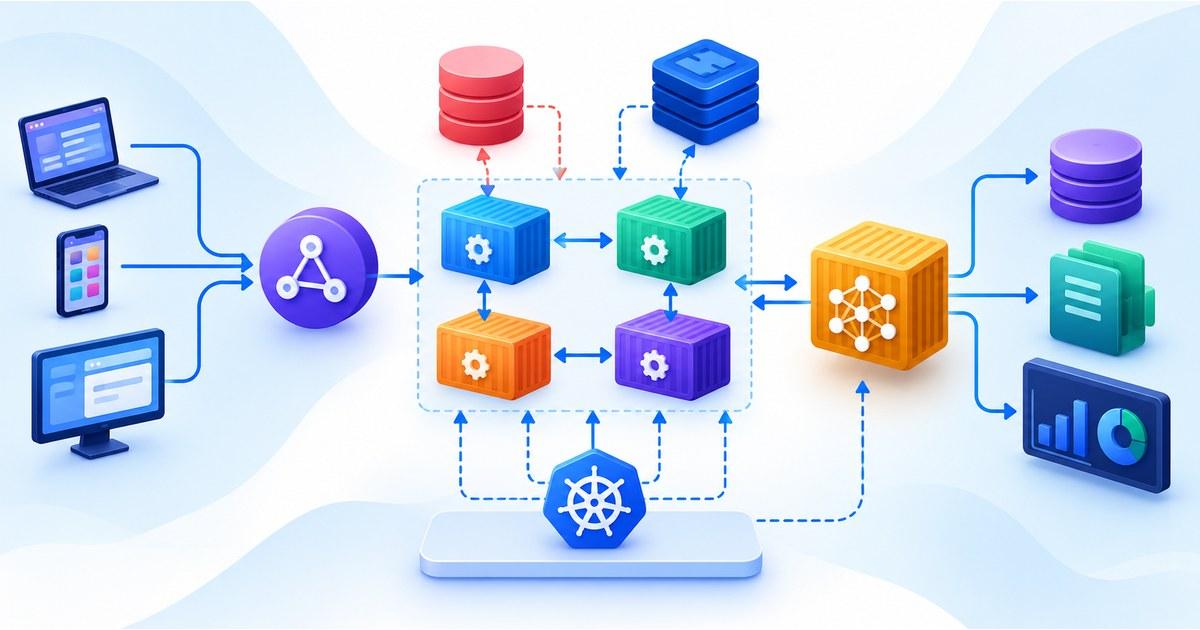
When users interact with a successful AI product, they typically experience only the polished interface presented on their screens. They type a question into a chatbot, receive a personalized recommendation, generate an image, summarize a document, or automate a repetitive task within seconds. From the user's perspective, the experience appears remarkably simple. Behind that seemingly effortless interaction, however, lies an extraordinarily complex engineering ecosystem working continuously to ensure the product remains reliable, secure, scalable, and responsive. The machine learning model may generate the answer, but dozens of interconnected systems determine whether the user receives that answer quickly, accurately, and consistently.
This hidden engineering layer is often the true differentiator between an AI demonstration and a successful AI product. Many organizations can build an impressive prototype capable of producing intelligent responses under controlled conditions. Far fewer can transform that prototype into a production-ready application capable of serving millions of users simultaneously while maintaining high availability, protecting sensitive data, controlling infrastructure costs, complying with regulations, and adapting to changing customer needs. Building this production environment requires expertise extending far beyond machine learning itself.
One of the biggest misconceptions surrounding AI product development is that model accuracy determines product success. While model quality certainly matters, production AI introduces an entirely different set of engineering challenges. What happens if thousands of users submit requests simultaneously? How are software updates deployed without interrupting service? How does the system recover when a cloud region experiences an outage? How are customer conversations protected from unauthorized access? How does the engineering team detect declining model performance before users notice? These questions have little to do with neural network architecture yet often determine whether an AI product succeeds or fails in the marketplace.
Production Infrastructure Turns Intelligent Models Into Reliable Products
Once an AI model has been trained and validated, the next challenge involves making it available to real users. This process, commonly known as model serving, extends far beyond uploading a trained model to a server. Production environments must handle unpredictable traffic, maintain low response times, recover from failures automatically, and deliver consistent performance regardless of demand. Engineers therefore build specialized serving infrastructure capable of efficiently allocating computing resources while ensuring users experience fast and reliable interactions.
Modern AI applications rely heavily on cloud infrastructure because enterprise-scale deployments demand flexibility and elasticity that traditional on-premises systems often struggle to provide. Cloud platforms enable organizations to allocate GPU resources dynamically, distribute workloads across multiple regions, store vast quantities of enterprise data, and scale applications automatically as user demand fluctuates. Rather than purchasing enough hardware to support peak usage throughout the year, companies can expand or reduce computing capacity according to actual traffic patterns, significantly improving operational efficiency.
The increasing complexity of enterprise AI has also made Application Programming Interfaces (APIs) indispensable. APIs allow AI models to communicate with business applications, customer relationship management systems, payment platforms, enterprise databases, document repositories, authentication services, and countless other software components. Instead of existing as isolated models, AI becomes integrated into broader digital ecosystems capable of supporting complete business workflows. Well-designed APIs therefore play a crucial role in transforming AI capabilities into practical business solutions.
Monitoring, Security, and Continuous Deployment Keep AI Products Running
Building infrastructure represents only the beginning of production AI engineering. Once an AI product reaches customers, engineering teams must ensure it continues operating effectively despite changing data, evolving user behavior, increasing demand, and emerging security threats. This responsibility introduces another layer of hidden engineering focused on monitoring, observability, security, scalability, cost optimization, and continuous deployment.
One of the most important capabilities is AI observability, which extends traditional software monitoring into machine learning operations. Conventional applications primarily monitor server health, application availability, and system errors. AI products require much deeper visibility. Engineering teams monitor inference latency, prediction quality, hallucination frequency, model drift, user satisfaction, retrieval accuracy, token consumption, API failures, and business performance indicators simultaneously. These insights enable organizations to detect declining model performance before customer experience deteriorates.
Closely related is the broader practice of monitoring production systems. Dashboards continuously track infrastructure utilization, GPU availability, request throughput, network performance, storage consumption, response times, and service health across distributed environments. Automated alerts notify engineers immediately when abnormal behavior occurs, allowing rapid investigation before problems escalate into customer-facing outages. For enterprise AI products serving millions of users, proactive monitoring has become essential rather than optional.
Security represents another critical engineering discipline operating behind every successful AI application. Enterprise AI systems process confidential conversations, financial records, healthcare information, intellectual property, and proprietary business knowledge. Engineers therefore implement encryption, authentication, access control, audit logging, secret management, vulnerability scanning, API protection, and prompt injection defenses throughout the architecture. These safeguards remain invisible to users but are fundamental for maintaining organizational trust and regulatory compliance.
Readers interested in exploring how enterprise engineering teams automate these production processes at scale should also explore "The Engineering Behind Autonomous AI Workflows," which examines the architectures, orchestration strategies, deployment pipelines, and infrastructure patterns that power modern AI systems.
Key Takeaway
The true success of an AI product depends on the engineering that users never see. Production machine learning, cloud infrastructure, APIs, AI pipelines, Kubernetes orchestration, observability, security, scalability, cost optimization, and continuous deployment work together to transform intelligent models into reliable, enterprise-grade products. While machine learning attracts attention, it is this invisible engineering ecosystem that determines whether an AI product can consistently deliver exceptional user experiences, adapt to changing business needs, and scale successfully over the long term.
Section 3: Building Trust Is Just as Important as Building Intelligence
An AI product may deliver remarkably accurate predictions, generate human-like conversations, or automate complex business processes, but none of these capabilities guarantee long-term success. The most successful AI products are not simply the most intelligent, they are the ones users trust. In today's enterprise environment, trust has become a competitive advantage that often outweighs raw model performance. Customers are willing to adopt AI only when they believe the system produces reliable results, protects sensitive information, respects privacy, minimizes bias, and behaves consistently across different situations. Without trust, even the most advanced AI product struggles to achieve widespread adoption.
This shift reflects the growing role of artificial intelligence in high-impact decision-making. AI is no longer limited to recommending movies or suggesting online purchases. It now assists doctors in diagnosing diseases, helps financial institutions detect fraud, supports recruiters during hiring, accelerates software development, analyzes legal contracts, and improves supply chain operations. Decisions made by AI systems increasingly influence people's careers, finances, health, and businesses. As the consequences of these decisions become more significant, organizations can no longer evaluate AI solely by accuracy or speed. They must also ensure that every recommendation, prediction, or generated response is responsible, transparent, and aligned with organizational values.
One of the biggest misconceptions surrounding artificial intelligence is that improving model intelligence automatically improves user confidence. In reality, users judge AI products differently from how engineers evaluate machine learning models. Developers may celebrate higher benchmark scores or lower error rates, but customers care about whether the system behaves predictably, explains its reasoning, protects confidential information, and recovers gracefully when mistakes occur. Trust therefore emerges from the complete user experience rather than the underlying algorithm.
Responsible AI Creates Confidence That Lasts
Responsible AI has become one of the most important foundations of modern AI product development because organizations recognize that technology must operate within ethical, legal, and social expectations. Responsible AI is not a single feature added during the final stages of development; instead, it represents a comprehensive approach that influences every phase of the product lifecycle, from data collection and model training to deployment and continuous monitoring.
One of the central components of responsible AI is explainability. Enterprise users often need to understand why an AI system reached a particular conclusion before acting upon its recommendations. A financial institution cannot reject a loan application without understanding the factors influencing the decision. Similarly, healthcare professionals require confidence that AI-assisted diagnoses are supported by meaningful evidence rather than unexplained statistical patterns. Explainability helps users validate AI outputs, identify potential errors, and develop confidence in the system over time. While some advanced models naturally function as complex "black boxes," engineering teams increasingly develop techniques that provide understandable insights into model behavior without sacrificing performance.
Another essential aspect of trust is bias mitigation. AI systems learn from historical data, and if that data reflects societal or organizational biases, models may unintentionally reproduce those biases in production. Successful AI companies therefore evaluate datasets carefully, monitor prediction outcomes across different demographic groups, and continuously assess whether model behavior remains fair as data evolves. Bias mitigation is not merely a regulatory requirement; it is a business necessity because customers expect AI products to make equitable and consistent decisions.
Many organizations also incorporate human feedback into their AI development processes. Human reviewers evaluate model outputs, identify errors, improve response quality, and provide corrective guidance that strengthens future performance. This iterative feedback loop enables AI systems to adapt to changing user expectations while maintaining alignment with organizational objectives. Rather than replacing human expertise, successful AI products combine machine intelligence with human judgment to create more reliable and practical solutions.
Governance, Security, and Privacy Sustain Enterprise Adoption
As AI products become deeply integrated into enterprise operations, organizations increasingly recognize that trust depends not only on intelligent outputs but also on robust governance and security practices. Businesses expect AI systems to protect confidential information, comply with legal requirements, and operate according to clearly defined organizational policies. Meeting these expectations requires comprehensive AI governance frameworks that establish accountability, monitor model behavior, and ensure responsible use throughout the product lifecycle.
Privacy protection has become particularly important because enterprise AI applications frequently process proprietary business documents, financial records, healthcare information, customer conversations, and intellectual property. Engineering teams implement encryption, role-based access controls, secure authentication mechanisms, audit logging, and data retention policies to ensure sensitive information remains protected. These safeguards operate behind the scenes, yet they play a decisive role in determining whether organizations are willing to deploy AI across critical business functions.
Strong governance also enables organizations to satisfy evolving regulatory requirements across different industries and geographic regions. Rather than treating compliance as an obstacle to innovation, successful AI companies integrate governance directly into product development. Documentation, model versioning, risk assessments, approval workflows, and continuous auditing become routine engineering practices that reduce operational risk while improving transparency. This structured approach enables enterprises to scale AI confidently without compromising legal or ethical responsibilities.
Equally important is the overall user experience. Trust grows when AI products communicate uncertainty honestly, provide clear explanations, request clarification when necessary, and allow users to maintain appropriate control over important decisions. Products that acknowledge limitations often inspire greater confidence than systems that appear overly certain while occasionally producing inaccurate information. By designing interfaces that encourage collaboration between humans and AI rather than blind dependence, organizations strengthen long-term user engagement.
Readers interested in exploring how production engineering, infrastructure design, and governance collectively shape dependable AI systems should also read "The Hidden Layers of AI Engineering Nobody Talks About," which examines the engineering disciplines that quietly determine whether enterprise AI products succeed beyond the machine learning model itself.
Key Takeaway
The long-term success of an AI product depends on more than intelligence, it depends on trust. Responsible AI, explainability, bias mitigation, human feedback, continuous evaluation, hallucination reduction, governance, privacy, security, and user-centered design work together to create systems that organizations and customers can rely upon with confidence. As artificial intelligence becomes increasingly embedded in business operations, the companies that prioritize trustworthy AI will not only reduce risk but also build stronger customer relationships, accelerate enterprise adoption, and establish sustainable competitive advantages in the rapidly evolving AI landscape.
Section 4: Why Successful AI Products Never Stop Evolving
One of the defining characteristics of every successful AI product is that it never remains static. Unlike traditional software applications, where a feature may be developed, tested, and released with only occasional updates, AI products are designed to learn, improve, and adapt continuously. Customer expectations evolve, business priorities shift, new technologies emerge, regulations change, and data patterns transform over time. An AI system that performs exceptionally well today may become less effective tomorrow if it is not continuously refined. This is why the world's leading AI companies treat product launch as the beginning of the journey rather than its conclusion.
Many organizations mistakenly believe that deploying an AI model marks the completion of an AI project. In reality, deployment simply transitions the product into its most important phase, continuous evolution. Once users begin interacting with an AI system, they generate valuable information about performance, usability, accuracy, and business impact that was impossible to observe during development. These real-world insights become the foundation for future improvements, allowing engineering teams to enhance both the intelligence and the overall customer experience.
The rapid pace of innovation within artificial intelligence makes continuous evolution even more essential. New foundation models, improved inference techniques, more efficient deployment frameworks, and emerging AI architectures appear almost every month. Companies that fail to adapt risk falling behind competitors that continuously incorporate technological advancements into their products. However, successful evolution is not driven solely by adopting newer models. It also depends on understanding customer behavior, measuring business outcomes, refining engineering processes, and ensuring every improvement contributes meaningful value rather than unnecessary complexity.
Continuous Feedback Drives Better AI Products
Every interaction between a user and an AI product creates an opportunity for improvement. Successful organizations recognize that customer feedback extends far beyond surveys or support tickets. Every question submitted to an AI assistant, every recommendation accepted or ignored, every generated response that requires correction, and every abandoned workflow provides valuable information about how the product performs under real-world conditions. Rather than viewing these interactions as isolated events, engineering teams transform them into actionable insights that guide future development.
One of the most effective mechanisms for achieving this is the creation of user feedback loops. These feedback loops collect explicit input, such as ratings or comments, alongside implicit behavioral signals like session duration, feature usage, response acceptance rates, and task completion patterns. Together, these metrics help product teams identify strengths, uncover weaknesses, and prioritize improvements based on actual customer behavior instead of assumptions. As the user base grows, these insights become increasingly valuable because they represent diverse use cases that are difficult to replicate during testing.
Continuous learning also depends on model retraining. Business environments rarely remain static. Customer preferences evolve, market conditions change, new products are introduced, and organizational knowledge expands. Consequently, the datasets used during initial model training gradually become outdated. Retraining allows AI systems to incorporate new information while maintaining accuracy and relevance. Rather than replacing models completely, engineering teams often update them incrementally using fresh data, ensuring that predictions and recommendations remain aligned with current business realities.
Another essential practice is A/B testing, which enables organizations to compare multiple versions of an AI feature before implementing widespread changes. Engineering teams may evaluate different prompt structures, retrieval strategies, recommendation algorithms, or user interface designs by exposing them to separate groups of users. Performance is then measured using objective metrics such as engagement, accuracy, customer satisfaction, conversion rates, or task completion time. This evidence-based approach minimizes risk while ensuring product improvements are supported by measurable outcomes rather than subjective opinions.
Long-Term Product Strategy Sustains Competitive Advantage
While technical improvements are essential, successful AI products evolve according to broader business objectives rather than technology trends alone. Organizations continuously measure product analytics to determine whether AI capabilities contribute to meaningful business outcomes. Metrics such as customer retention, feature adoption, operational efficiency, revenue growth, customer satisfaction, and productivity improvements help leaders evaluate whether engineering investments generate measurable value. These insights guide future development priorities while ensuring resources remain focused on customer impact.
As organizations mature, AI capabilities become integrated into a broader AI roadmap that extends several years into the future. Rather than responding reactively to every technological breakthrough, product leaders establish long-term strategies identifying which capabilities should be introduced, how infrastructure will scale, and how emerging technologies will align with organizational goals. This disciplined planning enables companies to innovate consistently without sacrificing stability or overwhelming customers with unnecessary changes.
Scaling globally introduces another dimension of continuous evolution. AI products serving international markets must accommodate multiple languages, cultural contexts, regulatory frameworks, and infrastructure environments. Engineering teams optimize inference performance across geographic regions, improve localization, strengthen security controls, and ensure compliance with regional data governance requirements. As user communities expand, products must maintain consistent quality regardless of location or operational scale.
None of these improvements occur in isolation. Successful AI companies depend on cross-functional collaboration between engineering, product management, design, customer success, legal, compliance, security, and business leadership. Product managers translate customer needs into strategic priorities. Engineers implement scalable technical solutions. Designers improve usability, while business stakeholders ensure every enhancement supports broader organizational objectives. This collaborative approach enables AI products to evolve holistically rather than focusing solely on algorithmic improvements.
To explore how modern engineering teams design intelligent systems that continuously improve through automation, monitoring, and adaptive learning, readers should also explore "How AI Engineers Design Systems That Never Stop Learning." The article provides a deeper understanding of the engineering principles that enable AI products to evolve reliably at enterprise scale.
Key Takeaway
The launch of an AI product is not the finish line, it is the beginning of continuous evolution. User feedback loops, model retraining, A/B testing, AI observability, product analytics, strategic roadmaps, global scalability, and cross-functional collaboration enable organizations to refine AI systems long after deployment. The companies that dominate the AI industry are not necessarily those with the most advanced models on day one, but those that continuously learn from their users, adapt to changing business needs, and improve their products through disciplined engineering and long-term strategic thinking.
Conclusion
Every successful AI product tells a story that most users never see. While headlines celebrate breakthrough models, billion-parameter architectures, and impressive benchmark scores, the true success of an AI product is rarely determined by the intelligence of its model alone. Behind every AI assistant that simplifies workflows, every recommendation engine that personalizes experiences, and every enterprise copilot that enhances productivity is a sophisticated engineering ecosystem designed to deliver reliability, scalability, security, and continuous value. The machine learning model may serve as the brain of the product, but it is the surrounding infrastructure, processes, and multidisciplinary collaboration that transform an intelligent algorithm into a solution trusted by millions of users.
Throughout this article, we have explored how successful AI products begin long before the first model is trained. The journey starts with understanding customer problems, validating business opportunities, defining measurable objectives, and developing a comprehensive data strategy. Organizations that invest in product discovery, customer research, and high-quality data establish a strong foundation for innovation, while those that rush directly into model development often struggle to build products that solve meaningful business challenges. This early planning phase ensures that artificial intelligence serves a genuine purpose rather than becoming an expensive technological experiment.
Frequently Asked Questions (FAQs)
1. What makes an AI product successful?
A successful AI product solves a real business problem while delivering reliable, scalable, secure, and trustworthy experiences. Success depends not only on machine learning models but also on engineering, infrastructure, user experience, governance, and continuous improvement.
2. Why is product discovery important before building an AI solution?
Product discovery helps organizations understand customer needs, validate business problems, define success metrics, and determine whether AI is the right solution. This reduces development risks and increases the likelihood of building products that deliver measurable business value.
3. How does data quality affect AI product performance?
High-quality data enables AI models to generate accurate, reliable, and consistent outputs. Poor-quality or biased data can lead to inaccurate predictions, unreliable recommendations, and reduced customer trust, regardless of how advanced the underlying model is.
4. What role does MLOps play in AI product development?
MLOps automates the deployment, monitoring, testing, versioning, and maintenance of machine learning models. It ensures AI products remain reliable, scalable, and continuously updated throughout their lifecycle.
5. Why is cloud infrastructure essential for AI products?
Cloud infrastructure provides scalable computing resources, GPU availability, storage, networking, and global deployment capabilities that allow AI products to handle varying workloads efficiently while maintaining high availability and performance.
6. What is AI observability?
AI observability refers to continuously monitoring AI systems to track model performance, inference latency, data drift, hallucinations, user engagement, and operational health. It enables engineering teams to detect issues early and optimize product performance proactively.
7. Why is Responsible AI important?
Responsible AI ensures that AI systems operate fairly, transparently, securely, and ethically. It helps organizations minimize bias, protect user privacy, comply with regulations, and build long-term trust with customers and stakeholders.
8. How do AI companies reduce hallucinations in Large Language Models?
Organizations reduce hallucinations using techniques such as Retrieval-Augmented Generation (RAG), domain-specific knowledge bases, prompt optimization, response validation, human feedback, and continuous evaluation to improve factual accuracy.
9. What is AI governance?
AI governance is the framework of policies, processes, and controls that guide the responsible development, deployment, monitoring, and management of AI systems. It helps organizations maintain compliance, accountability, transparency, and risk management.
10. Why do AI products require continuous model retraining?
User behavior, business conditions, and data patterns change over time. Continuous retraining allows AI models to adapt to these changes, maintain prediction accuracy, and deliver relevant, up-to-date results.
11. How is AI product development different from traditional software development?
Unlike traditional software, AI products rely heavily on data, machine learning models, continuous evaluation, model retraining, observability, and experimentation. AI systems evolve continuously based on new data and user interactions rather than remaining static after deployment.
12. What skills are essential for building successful AI products?
Professionals should develop expertise in machine learning, software engineering, data engineering, cloud computing, MLOps, AI system design, cybersecurity, product management, and business strategy. Strong communication and collaboration skills are equally important for working across multidisciplinary teams.
13. Why is user feedback critical for AI products?
User feedback helps organizations identify performance gaps, improve model accuracy, refine user experience, prioritize new features, and continuously optimize AI systems based on real-world usage rather than assumptions made during development.
14. How do enterprise AI products scale to support millions of users?
Enterprise AI products achieve scalability through cloud-native architectures, Kubernetes orchestration, distributed infrastructure, API-based integrations, load balancing, caching strategies, automated monitoring, and efficient resource management.
15. What is the future of AI product development?
The future of AI product development will focus on multimodal AI, autonomous AI agents, responsible AI, stronger governance, real-time personalization, improved AI observability, and closer collaboration between engineering, business, and product teams. Organizations that prioritize continuous innovation, trust, and scalable engineering practices will lead the next generation of AI-powered products.